Door Deadbolt Buying Guide
The right door deadbolt depends on your door, frame, lock style, and daily access needs. Start with a solid deadbolt and reinforced strike area, then add a keypad, smart feature, or secondary barrier when it solves a specific problem.
On this page (16 sections)
- What is a door deadbolt?
- Which door deadbolt type fits your door?
- What should you measure before buying a deadbolt?
- Why does the strike plate matter?
- How can you reinforce a door beyond the deadbolt?
- Which deadbolt setup suits a front door?
- Can you use a smart lock with a double-cylinder deadbolt?
- How do you choose a garage door deadbolt?
- How do sliding door locks differ from deadbolts?
- How do you protect keys and access items?
- Can a deadbolt hole cover help after hardware removal?
- What should you store separately from door keys?
- How should you install a door deadbolt?
- What maintenance does a door deadbolt need?
- Explore door locks and reinforcement by topic
- Which door deadbolt should you choose?
The right door deadbolt depends on your door, frame, lock style, and daily access needs. Start with a solid deadbolt and reinforced strike area, then add a keypad, smart feature, or secondary barrier when it solves a specific problem.
A lock protects an entry point only when the bolt reaches a sound strike area and the door closes correctly. Before you compare finishes or app features, check the door material, frame condition, backset, thickness, and nearby glass.
What is a door deadbolt?
A door deadbolt is a lock with a solid bolt that extends into the door frame instead of relying on a spring latch. The bolt is operated by a key, thumb turn, keypad, or motor, depending on the lock design.
Our guide to what is a deadbolt door lock explains the basic parts and operation. In simple terms, a deadbolt gives an exterior door a deeper locking element than a standard knob latch.
A deadbolt does not make a weak door indestructible. The frame, hinges, door material, strike plate, screws, and installation all affect how well the complete entry system resists force.
For a typical front entry, a single-cylinder deadbolt has a keyed cylinder outside and a thumb turn inside. A double-cylinder deadbolt uses a key on both sides, which changes both security and emergency exit considerations.
Which door deadbolt type fits your door?
A single-cylinder deadbolt is the usual starting point for a solid exterior door. Choose a double-cylinder version only after considering nearby glass, exit needs, and local rules.
Single-cylinder deadbolts
A single-cylinder deadbolt uses a key outside and a thumb turn inside. It is convenient for normal home entry because you can open the door from inside without searching for a key.
See our guide to the best single cylinder deadbolt options if you want to compare this style. A single-cylinder model is often a practical fit for a front door without reachable glass beside the lock.
Double-cylinder deadbolts
A double-cylinder deadbolt uses a key on the exterior and interior sides. It may help when a nearby window or glass panel could allow someone to reach an inside thumb turn.
The trade-off is important: you need a key to open the door from inside. Keep emergency egress, household routines, children, guests, and local requirements in mind before choosing this design.
Learn what is a double cylinder deadbolt before comparing models. If you are choosing for a front entry, our guide to the best double cylinder deadbolt locks for front door options covers the same decision in more detail.
Keypad deadbolts
A keypad deadbolt replaces or supplements a physical key with a code. If fingerprint entry is a priority, compare fingerprint locks for front doors.
It can suit households that need temporary access for family members, cleaners, guests, or service workers.
A code does not remove the need for a strong frame and correct installation. Check how codes are created, changed, and removed, and decide what you will do if the batteries run down.
You can compare best keypad locks for front door use when code entry is your main reason for changing the lock. Some buyers also consider fingerprint access, covered in our guide to the best biometric fingerprint door lock options.
Smart deadbolts
A smart deadbolt adds phone control, notifications, schedules, or other connected functions, depending on the model. The Yale Assure Lock 2 Touch review looks at one connected option.
These features can help when you want remote access or a record of lock activity.
Smart features add setup and maintenance tasks. Review power needs, connectivity, account access, physical backup entry, and how the lock behaves when the phone or network is unavailable.
For a broad comparison, see the best smart door locks. If app control matters most, compare the best smart door lock with app options, then narrow the choice to a model that fits your existing door.
The best smart lock for front door guide focuses on the front-entry use case. Buyers comparing common brands can also read Schlage Encode vs Encode Plus and Yale Assure lock reviews.
What should you measure before buying a deadbolt?
Measure the door thickness, backset, bore hole, edge bore, frame, and existing strike position before ordering a deadbolt. These dimensions decide whether the lock can fit and whether the bolt will enter the frame cleanly.
Check the door from the edge and the inside face. The backset is the distance from the door edge to the center of the lock bore.
Common locks may support more than one backset, but confirm the model's range.
Inspect the main bore hole and the smaller hole through the door edge. The deadbolt body must fit without forcing the door, and the exterior and interior parts must sit flat against the door faces.
Measure the door thickness if it is unusually thick, narrow, decorative, metal, or part of a special entry system. Also check whether trim, glass, storm doors, or security screens limit the space around the lock.
Close the door slowly and watch the bolt enter the strike. If it scrapes, stops, or needs pressure from the door, correct the alignment before relying on the lock.
Why does the strike plate matter?
The strike plate is the metal plate on the frame that receives the deadbolt. A properly fitted plate helps transfer force into the frame, but it cannot fix rotten wood, a loose jamb, or a badly aligned door.
Read what is a door strike plate to identify the plate and its role. A deadbolt can be strong while the surrounding frame remains the weak point.
A replacement plate should match the bolt opening and sit flat in the jamb. The screws should hold the plate firmly in sound material, not only in a thin layer of trim.
If the existing area is split, loose, or enlarged, follow the steps in door strike plate repair. Repairing the frame may matter more than replacing a lock that is already operating correctly.
How can you reinforce a door beyond the deadbolt?
A door reinforcement lock adds a second locking point or a separate barrier that supports the main deadbolt. The best choice depends on whether you want resistance while the door is closed, a visible deterrent, or extra control from inside.
Compare the best door reinforcement lock options for secondary protection. Read the mounting instructions carefully because a reinforcement device is only useful when it attaches to a strong surface.
A floor or wall-mounted barrier can help inside the home, but it may affect emergency exit, accessibility, and daily convenience. The hardware must be placed where household members can operate it safely.
For portable or visible interior resistance, see the best door security bars. A bar can make the door harder to open from outside, but it should not block a required exit.
A chain lock provides limited opening control for answering the door. It is not a replacement for a deadbolt, but the best door chain locks can suit situations where you want to open the door slightly while keeping a secondary connection engaged.
Which deadbolt setup suits a front door?
A front door usually benefits from a properly fitted single-cylinder deadbolt, a strong strike area, and a locking method that household members can use consistently. Add a keypad or smart feature only if access control is a real need.
For a standard keyed setup, review the best deadbolt locks for front doors. A matching knob and deadbolt can simplify the exterior appearance, while separate hardware can make replacement easier later.
If you want a coordinated set, compare the best door knob and deadbolt set options. For a double-cylinder arrangement, see the best double cylinder deadbolt and door knob set guide.
Replacement does not always mean changing the whole lock. If the cylinder, thumb turn, strike, or interior mechanism is damaged, review door deadbolt parts before buying a complete set.
Some homeowners want a familiar brand or a specific replacement style. Our guide to the best Prime-Line door lock options can help when that brand matches the existing hardware.
Can you use a smart lock with a double-cylinder deadbolt?
A smart lock usually works most easily with a compatible single-cylinder deadbolt, because the interior motor can turn the thumb-turn mechanism. A double-cylinder deadbolt may need a special design or a different replacement plan.
Read double cylinder deadbolt smart lock guidance before assuming a retrofit will work. Measure the interior mechanism and confirm that the smart lock can operate it without binding.
Some buyers want both keyless access and a key on each side. The guide to double cylinder deadbolt with keypad options covers that specific combination.
Smart access should not replace basic door checks. Test the lock with the door open first, then close the door and confirm that the bolt enters the strike without rubbing.
How do you choose a garage door deadbolt?
A garage entry deadbolt must fit the door and frame while matching the way the garage connects to the home. The door may need a different setup from a front entry because of side access, vehicle movement, or a separate interior doorway.
Use our garage door deadbolt lock guide when the lock is for a garage access door. Check whether the door is hollow, solid, metal, or part of a fire-rated separation before changing hardware.
Keep the garage remote, interior release, and emergency access plan in mind. A stronger lock should not create a situation where someone cannot safely leave or enter during a power failure or other emergency.
How do sliding door locks differ from deadbolts?
Sliding doors usually need a lock that controls horizontal movement or prevents the panel from lifting. A standard hinged-door deadbolt is not a direct substitute for a patio-door latch, track lock, pin, or security bar.
For a starting point, compare the best sliding door locks. The right choice depends on whether the door is a vinyl patio door, aluminum frame, sliding glass door, or another track design.
If the existing hardware is worn or missing, see the best sliding door lock replacement guide. Measure the panel, frame, track, and latch location before choosing a replacement.
Electronic access is also available for some sliding doors. Compare the best electronic sliding door locks when keypad or powered entry is more useful than a traditional latch.
What are the main types of sliding door locks?
The main sliding door lock types are track bars, pins, auxiliary latches, anti-lift devices, keyed latches, and electronic locks. Each controls a different weakness, so a visible bar and a small track pin do not provide the same use.
A track bar blocks the panel from moving along its track. A pin can stop movement through aligned holes, while an anti-lift design helps prevent the panel from being raised out of the track.
The Ideal Security Sliding Door Security Bar suits a patio or sliding glass door when you want a visible interior barrier that can also allow partial opening for ventilation.
Its title gives a 25.75 in length and an adjustment range of 15.7 to 26.75 in. Use the door's actual frame and panel measurements to confirm the fit before installation.
The bar mounts in the middle of the door and pivots out of the way when not needed. Its position can reduce bending during daily use, while the visual presence may help deter an attempted opening.
How do you protect keys and access items?
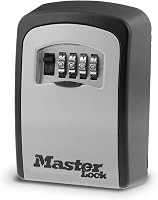
A key lockbox can give approved visitors access without requiring a hidden spare key. Choose a wall-mounted design with a resettable code, then place it where it is not obvious from the street.
The Master Lock 5401D is designed for up to 5 keys and installation on a wall or fixed object. Its metal body has a shutter door over the combination dials, and its exterior dimensions are 4-3/4 in high by 3-1/4 in wide by 1-1/2 in deep.
Its interior measures 3-1/4 in high by 2-1/4 in wide by 1 in deep, with 7.3 cubic inches of volume. That is enough for the stated key-storage purpose, but measure unusual keys, fobs, or tags before choosing it.
Set a code that approved users can remember without using an obvious address number. Change the code when access permissions change, and keep the box attached to a sound fixed surface.
Can a deadbolt hole cover help after hardware removal?
A deadbolt hole cover can close an unused bore after you remove a lock or change the door layout. It is useful when you want a clean surface without installing another active locking mechanism.
Compare the best door deadbolt hole cover options for the door thickness and hole size. A cover is not a substitute for a working lock, strike, or reinforcement device.
Before covering the hole, confirm that the door no longer needs that deadbolt position. If the opening is damaged, loose, or oversized, repair the door material before fitting cosmetic hardware.
What should you store separately from door keys?
Keep spare keys, access codes, and important documents under separate control. A key box helps with entry access, while a fire-resistant document box serves a different purpose and should not be treated as a door lock.
The SentrySafe Fireproof Money Safe with Key Lock is a compact document and valuables box with a black exterior, carrying grips, and a key lock. Its exterior measures 14.3 in wide by 11.2 in deep by 6.1 in high, with a 0.18 cubic foot capacity.
Its interior measures 12 in wide by 7.5 in deep by 3.5 in high. SentrySafe describes it as fire resistant for up to 1/2 hour at 1550°F, so it suits compact document storage rather than a large household archive.
For larger document storage, the SentrySafe HD4100 has a 0.65 cubic foot capacity and an interior sized 12 in wide by 8.1 in deep by 11.5 in high. It is designed for hanging file folders and uses a key lock with 2 keys included.
The HD4100 measures 14.3 in deep by 15.5 in wide by 14.3 in high. SentrySafe describes it as UL Classified for high-temperature resistance for up to 30 minutes and ETL Verified for water protection.
Choose the smaller box when portability and compact documents matter most. Choose the larger cabinet-style box when you need organized files, passports, certificates, insurance papers, and other paperwork in one place.
If you are also comparing paper destruction and document handling, see paper shredders: the complete buying guide. A shredder and a fire-resistant document box solve different parts of information security.
How should you install a door deadbolt?
Install a deadbolt only after confirming the lock fits the door and the bolt aligns with the frame. The most important setup checks are a clean bore, a straight bolt path, a flush strike, and firm fastening.
Use the lock's template and mark the door at the correct height. Drill carefully from both sides when the instructions call for it, which can reduce splintering on the opposite face.
The edge bore must be square to the door. If the bolt body sits at an angle, the deadbolt may bind even when the door looks closed.
A door deadbolt installation jig can help guide drilling on a standard door. Compare the best door deadbolt jig options when you want more control over hole placement.
After installation, test the lock with the door open. Turn the key and thumb turn several times, then close the door and check the bolt again without forcing it.
Do not rely on the lock if the door must be lifted, pulled, or pushed to align. Correct the hinges, frame, strike position, or door fit first.
What maintenance does a door deadbolt need?
A deadbolt needs periodic checks for loose screws, rubbing, damaged keys, and changes in door alignment. Clean the keyway and follow the lock maker's approved lubrication instructions rather than adding an unknown product.
Check the strike screws and the mounting screws on the interior and exterior trim. Tighten loose hardware carefully, but do not strip the screw heads or crush the door surface.
Test every access method. A keypad should accept the intended code, a smart lock should respond as expected, and a keyed cylinder should turn without excessive force.
Change access codes when household permissions change. Store spare keys in a controlled location, and avoid leaving them under a mat, planter, or other predictable hiding place.
For a double-cylinder lock, confirm that the inside key is available to the people who may need it. Never create a setup that leaves a required exit inaccessible during an emergency.
Explore door locks and reinforcement by topic
- Best Schlage Single Cylinder Deadbolts
- Best Key Storage Lockboxes
- Best Kwikset SmartCode Deadbolts
Which door deadbolt should you choose?
Choose a single-cylinder deadbolt for a typical solid front door when simple inside operation matters. Choose a double-cylinder model only when nearby glass changes the risk and you have a safe, practical exit plan.
Choose a keypad or smart deadbolt when controlled access, temporary codes, or remote management justify the extra setup. Choose a reinforcement lock or security bar when the frame or door needs a second barrier.
For sliding glass doors, use a purpose-built sliding lock, anti-lift device, or mounted security bar. For keys and documents, keep a key lockbox and a fire-resistant safe in separate roles.
The best door deadbolt is the one that fits the door, locks without force, reaches a sound strike area, and works for everyone who must use the entry. Measure first, reinforce the frame, then add convenience features that match your routine.
Frequently asked questions
What is the best type of door deadbolt?
A single-cylinder deadbolt suits most exterior doors when you want a key outside and a thumb turn inside. Choose a double-cylinder model only when glass or another opening near the door creates an inside access concern, because it requires a key on both sides.
Are keypad deadbolts safer than keyed deadbolts?
A keypad deadbolt can make daily entry easier and lets you avoid sharing physical keys, but it still needs a strong bolt, secure mounting, and a reinforced frame. Compare the lock's fit and access controls rather than assuming electronic access is automatically stronger.
What makes a door strike plate secure?
A secure strike plate matches the deadbolt, sits firmly in the frame, and uses suitable screws that reach solid framing. The plate cannot compensate for a weak or damaged door jamb, so inspect the surrounding wood before installing a replacement.
Do sliding doors use deadbolts?
Sliding doors usually use a hook, latch, pin, or security bar rather than a standard hinged-door deadbolt. Measure the door style and track, then choose a lock that prevents lifting, forced sliding, or opening while still allowing safe exit.
Can a smart lock fit any deadbolt?
A smart lock fits only when its mounting pattern, interior mechanism, door thickness, and deadbolt operation are compatible. Check those measurements before choosing a retrofit, and confirm that the existing deadbolt turns smoothly with the door closed.