What Is a Double Cylinder Deadbolt?
A double cylinder deadbolt uses a key on both the inside and outside of the door. It can help limit access through nearby glass, but you must consider safe exit during an emergency.
On this page (9 sections)
- How does a double cylinder deadbolt work?
- Why would you choose a double cylinder deadbolt?
- Is a double cylinder deadbolt safer than a single cylinder?
- Where should you keep the inside key?
- What should you check before installing one?
- Can you use another lock with a double cylinder deadbolt?
- How can you protect important keys and papers?
- What are the main drawbacks?
- Is a double cylinder deadbolt right for your door?
A double cylinder deadbolt uses a key on both the inside and outside of the door. Unlike a standard single-cylinder deadbolt, it has no inside thumb turn, so the door requires a key to lock or open from either side.
This design can help on doors with nearby glass. Someone who breaks the glass may not be able to turn an indoor thumb turn, but the same feature can make emergency exit slower.
How does a double cylinder deadbolt work?
A double cylinder deadbolt has a keyed cylinder on each side of the door. Turning the correct key moves the bolt into or out of the strike plate in the door frame.
The outside cylinder controls entry from outdoors. The inside cylinder controls exit, locking, and opening from indoors.
The phrase deadbolt double cylinder describes the same basic arrangement. Some people also call it a double cylinder deadbolt lock.
The bolt itself should extend into a strong, properly aligned strike plate. The lock cannot make up for a weak door frame, loose hinges, or short mounting screws.
For the wider role of the lock in a complete entry setup, see this guide to door locks and reinforcement.
Why would you choose a double cylinder deadbolt?
A double cylinder deadbolt can make sense when a door has glass within reach of the inside lock control. It removes the inside thumb turn that could otherwise be rotated through a broken pane.
This setup may suit a front door with a narrow glass panel, a door beside a sidelight, or another entry where the indoor lock control is exposed. Measure the glass and the distance to the lock before deciding.
The trade-off is slower exit. Everyone who may need to leave the home should know where the inside key is and how to use it.
Local building and fire rules may restrict double-cylinder locks in some situations. Check the requirements for your property before installing one, especially on a required exit door.
Is a double cylinder deadbolt safer than a single cylinder?
A double cylinder deadbolt can provide a useful barrier against a specific glass-reach problem, while a single cylinder deadbolt usually offers faster indoor operation. Neither choice is automatically safer for every door.
A single cylinder deadbolt has a keyed outside cylinder and an inside thumb turn. That design is often easier for daily use because you don't need to find a key when leaving.
Compare it with best single cylinder deadbolts if the door has no reachable glass and quick exit is a high priority.
Think about the people using the door. Children, older adults, guests, and anyone who may need to leave during smoke or another emergency should be able to reach and use the inside key without confusion.
Where should you keep the inside key?
Keep the inside key near the door, visible to household members, and outside the reach of someone at the glass. A fixed location is easier to remember than moving the key between rooms.
Don't leave the key in the lock if the door has glass that can be broken from outside. A person may be able to reach through the opening and turn or remove the key.
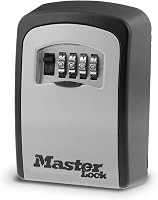
A wall-mounted key box can help organize spare keys elsewhere in the home. The Master Lock 5-Key Combination Safe Black/Silver 5401D has a 4-digit resettable combination, a metal body, a shutter door, and an interior volume of 7.3 cubic inches.
Its exterior measures 4-3/4 in high by 3-1/4 in wide by 1-1/2 in deep. The interior measures 3-1/4 in high by 2-1/4 in wide by 1 in deep, so check the key sizes and mounting location before use.
The box is designed for indoor and outdoor use, and its shutter door helps protect the dials from weather. It is better suited to organized spare-key storage than to replacing the emergency key kept near a double cylinder deadbolt.
What should you check before installing one?
Check the door thickness, backset, borehole size, edge bore, and strike alignment before buying a replacement deadbolt. The new lock must match the existing holes or be suitable for careful modification.
Inspect the door frame as well. A long bolt entering a weak or poorly attached frame may offer less protection than a properly reinforced strike area.
The key should turn smoothly without forcing it. If the bolt rubs against the strike plate, correct the alignment before relying on the lock.
Test the lock with the door open first. Then close the door and confirm that the key works from both sides while someone remains nearby.
Can you use another lock with a double cylinder deadbolt?
You can combine a double cylinder deadbolt with other entry controls, but each device must suit the door and the way your household exits. Avoid adding a lock that can trap people inside or make the key hard to reach.
A sliding patio door needs a different approach from a hinged entry door. The Ideal Security Sliding Door Security Bar with Childproof Lock, Adjustable, for Patio Doors and Sliding Glass Doors (25.75-47.5 Inches) is an adjustable aluminum bar for sliding and patio doors.
It includes a child-proof anti-lift lock, mounting hardware, and a saddle. Its listed dimensions are 25.75 in long, 0.75 in wide, and 1.5 in thick, while the bar adjusts for partial opening and ventilation.
The bar mounts at the middle of the door and can pivot out of the way when not needed. It is for sliding-door security, not a replacement for a keyed deadbolt on a hinged entry door.
For electronic options, read about a double cylinder deadbolt smart lock. If keypad entry is your priority, see whether a double cylinder deadbolt with keypad fits the door and the exit plan.
How can you protect important keys and papers?
A double cylinder deadbolt protects an entry point, but it does not secure documents or spare keys inside the home. Store those items according to the risk you are trying to manage.
The SentrySafe Fireproof Money Safe with Key Lock has a black exterior, a 0.18 cubic foot capacity, and interior dimensions of 12 in wide by 7.5 in deep by 3.5 in high.
It has a flat key lock, two keys, hidden carrying grips, and a concrete with resin body. SentrySafe states that it provides fire protection for up to 1/2 hour at 1550°F.
Use it for documents and small valuables rather than for controlling access to the door. Keep its keys in a place that supports your household's emergency plan, and don't store both keys beside the safe.
Fingerprint locks may suit readers who want another entry method. Compare the best fingerprint locks for front doors after checking power, backup entry, and emergency access details.
What are the main drawbacks?
The biggest drawback is the need for a key on the inside. A lost key, poor lighting, or confusion during an emergency can delay exit.
A double cylinder deadbolt also requires more deliberate household training. Every regular user should know where the inside key is, how far to turn it, and what to do if the door does not open smoothly.
The lock may not be appropriate for every exit door because local rules can require quick operation without a key. Ask a qualified locksmith or check local requirements before changing a required exit.
Smart and keypad designs can reduce key handling, but they bring their own questions about batteries, backup entry, and compatibility. Read Schlage Encode Smart WiFi deadbolt reviews and Yale Assure lock reviews for related electronic options.
Is a double cylinder deadbolt right for your door?
A double cylinder deadbolt is most suitable when nearby glass creates a realistic reach-through concern and the household can manage a clearly placed inside key. It is less suitable when fast, simple exit is the main need.
Choose a double cylinder deadbolt for a glass-adjacent entry after checking local rules and reinforcing the frame. Choose a single cylinder design when quick indoor operation matters more and the thumb turn is not exposed.
For the basic lock type and its parts, start with what a deadbolt door lock is. The right choice is the one that addresses the door's weak point without creating a new problem during an emergency.
Frequently asked questions
What is a double cylinder deadbolt?
A double cylinder deadbolt is a lock with a keyed cylinder on both sides of the door. You need a key to lock or open it from inside and outside, which can reduce access through nearby glass but may slow emergency exit.
Is a double cylinder deadbolt safer than a single cylinder?
A double cylinder deadbolt can be useful when a door has glass close enough for someone to reach the inside thumb turn. A single cylinder deadbolt is usually quicker to operate from indoors, so the better choice depends on the door layout, local rules, and your household's exit needs.
Can you open a double cylinder deadbolt from inside?
Yes. A double cylinder deadbolt opens from inside with the correct key.
Keep the key in a known, reachable place near the door, while avoiding a location where someone could reach it through broken glass or an opening.
Can a smart lock work with a double cylinder deadbolt?
Some smart locks can work only after the existing inside cylinder is replaced or the lock hardware is changed. Check the lock type, door thickness, backset, and indoor clearance before choosing a model; a retrofit designed for a single-cylinder lock may not fit.