What Is a Door Strike Plate?
A door strike plate is the metal plate on the door frame that receives the latch or deadbolt. It helps guide the bolt into the frame and spreads the lock's contact across the jamb.
On this page (11 sections)
- What does a door strike plate do?
- What are the common types of door strike plates?
- How does a strike plate help a door latch?
- How does a strike plate support a deadbolt?
- How do you choose the right strike plate size?
- Which finish and color should you choose?
- What products can support door security?
- How do you install a door strike plate?
- What is the main difference between interior and exterior plates?
- More guides on this topic
- What is a door strike plate, in simple terms?
A door strike plate is the metal plate fixed to the door frame where the latch or deadbolt enters. It guides the lock into the jamb, covers the cutout in the frame, and helps distribute contact around the opening.
The strike plate is part of the lock's receiving hardware. The lock body sits in the door, while the strike plate gives its latch or bolt a place to land when the door closes.
What does a door strike plate do?
A door strike plate receives the latch or deadbolt and protects the door jamb. Its opening lines up with the lock so the door can close and secure without the bolt hitting bare wood.
A basic latch plate usually has one opening for the spring latch. A deadbolt plate has a deeper opening for the deadbolt.
Some door strike plates have separate openings for both.
The plate also covers the edge of the mortise cut into the frame. That gives the lock hardware a finished surface and reduces wear from the latch rubbing against exposed wood.
For broader door hardware planning, see our guide to door locks and reinforcement.
What are the common types of door strike plates?
Common types include latch plates, deadbolt plates, combination plates, adjustable plates, and security plates. The right type depends on the lock installed in the door and the shape of the existing cutout.
A latch strike plate is made for the smaller spring latch. A deadbolt strike plate has an opening sized for the larger bolt and may extend farther across the jamb.
A combination strike plate has openings for both. A double door strike plate may be designed for a pair of doors or a lock arrangement that needs two receiving points.
Our guide to a door strike plate double explains what to check.
Some plates have square corners, while others have rounded corners. The corner shape needs to match the mortise in the door frame unless you plan to modify the wood.
What is a round door strike plate?
A round door strike plate has rounded corners around its outer shape or opening. It can suit a frame cut with a router or chisel pattern that leaves curved corners.
Measure the existing plate before replacing it. Our guide to a door strike plate round covers the key measurements and fit questions.
What is an adjustable door strike plate?
An adjustable door strike plate lets you shift part of the receiving area to correct small alignment problems. It can help when the latch does not meet the center of the opening after the door settles.
Adjustment does not replace proper installation. Check the hinge screws, frame alignment, and latch position before relying on the plate to solve a larger door problem.
How does a strike plate help a door latch?
A strike plate helps a door latch by providing a smooth, aligned opening for the spring latch. When the door closes, the angled latch nose contacts the plate and retracts, then springs into the opening.
If the plate is too high, too low, or too far toward the stop, the latch may scrape the plate or fail to enter fully. A loose plate can also shift as the door is opened and closed.
A door latch strike plate is the most direct choice when your problem involves the spring latch rather than the deadbolt.
How does a strike plate support a deadbolt?
A deadbolt strike plate receives the solid bolt when you turn the lock. The opening must be deep and wide enough for the bolt to extend without binding against the frame.
The plate's size, screw placement, and fit affect how the hardware sits in the jamb. A larger plate may cover more of the frame, but it still needs to match the lock and mortise.
Compare options in our guide to the best door deadbolt strike plate. For an outside entry door, see best exterior door strike plates.
How do you choose the right strike plate size?
Choose a strike plate by matching the lock opening, plate dimensions, corner shape, screw spacing, and frame mortise. Start by removing or measuring the current plate before ordering a replacement.
Measure the plate's height and width, then note the distance between screw holes. Measure each opening and check how far it sits from the plate's edge.
A thin replacement may not cover the existing mortise, while a larger plate may require new woodwork. Our guide explains how to choose a thick door strike plate when plate depth and frame coverage matter.
Extra-long and long plates can cover more of the jamb. See best door strike plates extra long and best long door strike plates for those formats.
An oversized option may help cover a wide or damaged area, but it needs enough clear wood for secure screws. Compare best large door strike plate choices after measuring the frame.
Which finish and color should you choose?
Choose a finish that matches the other visible door hardware or covers the existing plate mark. Finish is mainly a visual decision, but the new plate should still match the lock opening and frame cutout.
Black plates suit dark hinges, handles, and locks. See best door strike plate black for black options.
Brass can suit traditional hardware and warm wood tones. Our guide to the best brass door strike plate focuses on that finish.
A blank plate has no latch or bolt opening. It can cover an unused frame opening, but it cannot receive a latch or deadbolt.
See best door strike plate blank when you need a cover rather than a working receiver.
What products can support door security?
A strike plate improves the receiving side of a hinged door, but it is only one part of a home security plan. These products address nearby needs without replacing a correctly fitted lock and strike plate.
Key storage for controlled access
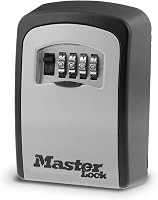
The Master Lock 5-Key Combination Safe Black/Silver 5401D is suited to homes that need wall-mounted storage for up to 5 keys. It has a metal body, a resettable 4-digit combination, indoor and outdoor use, and a 7.3 cubic inch interior.
Its exterior measures 4-3/4 in H x 3-1/4 in W x 1-1/2 in D, while the interior measures 3-1/4 in H x 2-1/4 in W x 1 in D. Choose it when controlled key access is useful, and measure the mounting location before installation.
Fire-resistant document storage
The SentrySafe Fireproof Money Safe with Key Lock is suited to households that need portable storage for papers, digital media, and small valuables. It has a black exterior, a key lock, 2 keys, carrying grips, and 0.18 cubic feet of capacity.
The exterior measures 14.3 in W x 11.2 in D x 6.1 in H. The interior measures 12 in W x 7.5 in D x 3.5 in H, so check document sizes before choosing it.
A visible barrier for sliding doors
The Ideal Security Sliding Door Security Bar with Childproof Lock, Adjustable, for Patio Doors and Sliding Glass Doors (25.75-47.5 Inches) is suited to patio and sliding glass doors. It has an aluminum bar, a childproof anti-lift lock, a saddle, mounting hardware, and door-mount installation.
The bar adjusts from 15.7 to 26.75 in according to its product details, while the title gives a 25.75–47.5 in range. Confirm the opening and mounting position before installation, especially if you want ventilation or a pet-door gap.
How do you install a door strike plate?
Install a strike plate by aligning its opening with the latch or deadbolt, marking the screw holes, and securing it flat to the jamb. The door should close without forcing the bolt against the plate.
If the old plate fits and the new plate has the same shape, use it as a guide. If the opening is misaligned, identify whether the issue comes from hinge movement, a shifted frame, or the strike position.
Use screws that fit the plate and leave enough solid wood for the threads. Tighten the plate without sinking it so far that the metal bends or the latch catches.
An extra guard can add coverage around the receiving area. See best door strike plate guard when the frame needs more protection.
What is the main difference between interior and exterior plates?
Interior plates usually serve lighter-duty bedroom, bathroom, or hallway doors, while exterior plates receive locks used on entry doors. The correct choice still depends on the lock, frame, dimensions, and alignment.
See best interior door strike plate for inside doors. For an entry door, compare best exterior door strike plate options and verify the opening before ordering.
A strike plate does not make a weak door, frame, or lock secure by itself. Treat it as one matched part of the complete door hardware system.
More guides on this topic
- Best Adjustable Door Strike Plates
What is a door strike plate, in simple terms?
A door strike plate is the receiver attached to the door frame for a latch or deadbolt. Pick a replacement by matching the lock type, opening, dimensions, screw spacing, corner shape, and finish.
Choose a latch plate for a spring latch, a deadbolt plate for a deadbolt, and a combination plate when both use the same receiving area. For small alignment problems, consider an adjustable design, then check the frame and hinges if the door still does not close cleanly.
Frequently asked questions
What is a door strike plate?
A door strike plate is a metal plate attached to the door frame. It has an opening for the latch, deadbolt, or both, helping guide the lock into the jamb and protecting the edge of the frame from repeated contact.
Does a door need a strike plate?
Most hinged doors with a latch or deadbolt need a strike plate because the lock needs a shaped opening in the frame. Some specialized locks use a different receiver, but a standard residential door usually uses one or more strike plates.
What is the difference between a latch strike plate and a deadbolt strike plate?
A latch strike plate receives the spring-loaded latch that holds a closed door in place. A deadbolt strike plate receives the larger locking bolt, and some plates combine both openings when one lockset uses a latch and deadbolt together.
How do you choose a door strike plate?
Match the strike plate to the lock type, opening shape, screw spacing, door-frame cutout, and finish. Measure the existing plate and check whether the new plate needs a round-corner, square-corner, double, long, or adjustable design.