What Is a Deadbolt Door Lock?
A deadbolt door lock uses a solid bolt that moves into the door frame instead of relying on a spring latch. It adds focused resistance to forced entry, but correct installation and a strong door frame still matter.
On this page (7 sections)
- How does a deadbolt door lock work?
- What is the difference between a deadbolt and a latch lock?
- What types of deadbolt door locks are common?
- How do you choose a deadbolt for a front door?
- Which products help with related door-security needs?
- Can a deadbolt replace other door-security measures?
- What should you remember about deadbolt door locks?
A deadbolt door lock uses a solid bolt that moves into the door frame when you lock it. Unlike a spring latch, it doesn't normally retract just because someone pushes against the door, so it provides a separate layer of security for many hinged exterior doors.
The lock is only one part of the system. A strong door, a secure frame, a properly fitted strike plate, and long enough mounting screws all affect how well the door resists pressure.
How does a deadbolt door lock work?
A deadbolt door lock works by moving a solid metal bolt between the door and its frame. Turning a key, thumb turn, keypad, or other control retracts the bolt so you can open the door.
A spring latch has a sloped edge that catches in the strike plate when the door closes. It is useful for keeping a door shut, but it is not the same as a deadbolt and should not be treated as the only security lock on an exterior door.
The bolt extends through the edge of the door into a hole in the frame. The strike plate surrounds that opening and helps guide the bolt into place.
What is the difference between a deadbolt and a latch lock?
A deadbolt needs an active locking action, while a latch lock often catches automatically when the door closes. The deadbolt has a solid, usually squared-off bolt, while a latch uses a spring-loaded beveled tongue.
This difference changes daily use. You may need to turn a key or thumb turn every time you lock a deadbolt, while a latch can close behind you without a separate locking step.
A latch lock is convenient, but convenience can lead to an unprotected door if you don't turn the lock. A deadbolt can also be inconvenient if the door is misaligned and the bolt binds in the frame.
For door reinforcement, see our guide to door deadbolt locks and reinforcement. It covers the surrounding hardware that helps a deadbolt work as intended.
What types of deadbolt door locks are common?
Single-cylinder deadbolts are common on front doors because they use a key outside and a thumb turn inside. Double-cylinder models use a key on both sides, while keyless models use a keypad, touchscreen, or another electronic control.
A single-cylinder lock is usually simple to operate from inside. However, a nearby window may allow someone to reach the inside thumb turn after breaking the glass.
A double-cylinder design can reduce that specific access route because the inside also needs a key. Read our explanation of what is a double cylinder deadbolt before choosing one, especially if the door is part of an escape route.
Electronic deadbolts can reduce the need to carry a key, but they add batteries, controls, and setup decisions. A keypad lock may suit a busy household, while a keyed lock may appeal to someone who wants a simpler mechanical system.
How do you choose a deadbolt for a front door?
Choose a deadbolt that matches the door thickness, backset, bore holes, frame, and your preferred way to open it. Confirm the measurements before ordering and make sure the strike area can accept the bolt.
For a front door, consider:
- Single-cylinder or double-cylinder operation
- Keyed, keypad, or other access method
- The door material and thickness
- The distance from the door edge to the lock center
- The condition of the frame and strike area
- Whether the door has nearby glass
- Whether everyone in the home can operate it quickly
A deadbolt won't correct a loose frame or a door that does not close squarely. Tighten loose hinges, repair damaged wood, and check that the bolt enters the strike opening without scraping.
Our guide to best deadbolt locks for front doors can help you compare common front-entry setups.
What should you check around the deadbolt?
Check the door frame, strike plate, screws, hinges, and door movement. The bolt should extend fully into the frame without needing force.
Don't rely on a decorative plate alone to strengthen a weak frame. The screws and the wood or other material around them need to hold the strike plate securely.
Follow the lock manufacturer's installation instructions. If the holes do not line up or the door has unusual construction, a qualified locksmith can help prevent an unsafe installation.
Which products help with related door-security needs?
A deadbolt protects a hinged door, but it doesn't solve every security problem around a home. These products address key storage, document protection, and sliding-door reinforcement.
Key storage for trusted access
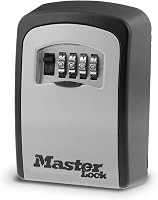
A wall-mounted key box can help when a trusted person needs access without carrying a spare key. The Master Lock 5-Key Combination Safe Black/Silver 5401D has a metal body, a 4-digit resettable combination, a shutter door, and space for up to 5 keys.
Its exterior measures 4-3/4 in H x 3-1/4 in W x 1-1/2 in D, with a 7.3 cubic inch interior. It is designed for wall or fixed-object installation and is intended for indoor and outdoor use.
Choose this type of box when controlled key access matters more than carrying a key. Mount it where visitors cannot easily see the combination, and change the code when access permissions change.
Fire protection for important documents
A deadbolt helps secure the room, but it does not protect papers from fire. The SentrySafe Fireproof Money Safe with Key Lock has a black exterior, a key lock, a carrying handle, and 0.18 cubic feet of storage.
Its exterior measures 14.3 in W x 11.2 in D x 6.1 in H, while the interior measures 12 in W x 7.5 in D x 3.5 in H. It is designed to protect papers, digital media, and valuables from fire for up to 1/2 hour at 1550°F.
Use it for documents that need a separate layer of protection from door security. Review the limits of any fire-resistant container, and keep the 2 included keys in separate secure locations.
For a related storage decision, read Can a Fire-resistant Document Bag Replace a Rated Home Safe?.
Reinforcement for sliding glass doors
A standard deadbolt is not a direct solution for a sliding glass door. The Ideal Security Sliding Door Security Bar with Childproof Lock, Adjustable, for Patio Doors and Sliding Glass Doors (25.75-47.5 Inches) is made for this different door style.
It uses an aluminum bar, a child-proof anti-lift lock, a saddle, and mounting hardware. The bar mounts at the middle of the door and can be positioned to keep the door fully closed or partially open for ventilation.
This type of bar suits households that want a visible barrier on a sliding door. Because it is door-mounted, measure the frame and follow the mounting instructions before drilling.
See best door security bars for more options, or compare the best security bar for sliding glass doors when your door uses a glass panel and track.
Can a deadbolt replace other door-security measures?
A deadbolt is one layer of protection, not a complete home-security plan. It cannot secure a sliding glass door in the same way as a hinged front door, and it cannot protect documents from fire.
Use the lock with a sound frame, working door hardware, and sensible entry habits. Keep keys controlled, avoid hiding spare keys in obvious places, and don't leave an exterior door unprotected for convenience.
A smart deadbolt may add remote controls or access codes, but it also requires attention to batteries and account settings. Read Yale Assure Lock 2 Touch review if biometric entry is part of your decision.
For a garage, choose hardware made for that door and its movement. Our guide to garage door deadbolt locks explains why a garage-door solution may differ from a front-door deadbolt.
What should you remember about deadbolt door locks?
A deadbolt door lock adds security by placing a solid bolt into the door frame, while a latch lock mainly keeps the door closed. Pick a single-cylinder model for simple interior operation, consider a double-cylinder model only after checking emergency-exit needs, and repair weak frame hardware before relying on the lock.
For related protection, use a key box when trusted access is needed, a fire-resistant safe for important documents, and a mounted bar for sliding glass doors. The right choice depends on the door type, the frame, and the problem you need to solve.
Frequently asked questions
What is a deadbolt door lock?
A deadbolt door lock is a lock with a solid bolt that extends into the door frame when you turn a key, thumb turn, or other control. Unlike a spring latch, the bolt does not use a beveled edge that retracts when pushed, so the door needs a separate action to open.
Are deadbolts safer than latch locks?
A properly installed deadbolt can resist common forced-entry pressure better than a latch lock because its solid bolt reaches into the strike area. The result still depends on the bolt length, strike plate, screws, door material, frame, and how well the door closes.
What is the difference between a single-cylinder and double-cylinder deadbolt?
A single-cylinder deadbolt uses a key outside and a thumb turn inside. A double-cylinder deadbolt uses a key on both sides, which can reduce access through a nearby broken window but may slow emergency exit.
Check local rules and fire-safety guidance before choosing one.
Can a deadbolt be used on a sliding glass door?
A standard deadbolt is made for a hinged door and usually isn't the right fit for a sliding glass door. Sliding doors need a compatible lock, bar, or anti-lift device that works with the door's track and frame, such as a purpose-built patio door security bar.