7 Best Key Storage Lockboxes (November 2026)
The best key storage lockboxes include the Fayleeko Key Lock Box Wall Mounted for most homes, the RUDY RUN Key Lock Box for Outside for outdoor shared access, and the GRIFEMA Key Lock Box for flexible mounting.
On this page (5 sections)
The best key storage lockbox for most homes is the Fayleeko Key Lock Box Wall Mounted, with room for up to 5 shorter house keys and a resettable 4-digit code.
That choice keeps the main job simple. You get a fixed place for a spare key and a code for authorized people, rather than handing over a physical copy.
Choose ISEYOU for higher capacity, or KeyGuard for vehicle access. ISEYOU holds up to 10 standard door keys, which suits a household or rental with a larger shared key set.
KeyGuard mounts to a car window, so it suits vehicle access rather than a front door.
A lockbox helps trusted people get in without hiding a key near the door. That matters for family, pet sitters, cleaners and guests who need entry at set times.
It also helps when you are away, since access does not depend on meeting someone in person.
The right choice depends on where you will mount it, how many keys you need to store and whether access is at a home, rental, office or vehicle.
Start with location, because a wall, a door handle and a car window place different demands on size, weight and mounting.
Then check capacity, because a box for 5 shorter keys may not suit longer keys or a larger set of fobs and cards.
Finally, check code style, because rotating dials, a keypad and large push buttons feel different in daily use.
Use a wall-mounted box for a regular entry point. A fixed position keeps the routine predictable and the spare key in one known place.
For a temporary location, GRIFEMA's hanging shackle or RUDY RUN's flexible placement may fit better. Hanging use can suit a gate, railing or garage handle where drilling into a wall is not practical.
For connected entry, compare Schlage Encode and Encode Plus smart locks. A smart lock can reduce the need for a spare key, while a lockbox keeps a physical backup for guests or emergencies.
If you need a key near a car, the KeyGuard SL-591 solves a different problem. Judge it by window mounting and push-button entry rather than home wall use.
Measure your keys, check the mounting surface and note who will use the code before you choose. That check helps you avoid a box that is too small, too large or awkward at the entry you care about most.
Our picks at a glance
-
1

-
2

-
3

- 4
 Check it
Puroma 2 Key Lock Box Combo Wall-Mounted
Best for a two-pack setup - 5
 Check it
ISEYOU Lock Box for Keys with Code
Best for multiple keys - 6
 Check it
KeyGuard SL-591 Car Window Punch Button Lock
Best for vehicle access - 7
 Check it
Vaultz Locking Storage Chest with Dual Combination
Best for larger valuables
The best key storage lockboxes for different access needs
The best key storage lockbox depends on the access job. Fayleeko is the strongest general choice, while the other picks focus on outdoor sharing, flexible mounting, multiple boxes, higher capacity, vehicle access or broader storage.
Our score weighs specs, features and buyer feedback against the needs of this keyword. We compared the stated materials, code systems, capacity, mounting choices and intended use.
| Product | Best for | Capacity | Size | Mounting | Our score |
|---|---|---|---|---|---|
| Fayleeko Key Lock Box Wall Mounted | most homes | Up to 5 house keys | 1.6 x 3.54 x 4.7 in | Wall mount | 9.7 |
| RUDY RUN Key Lock Box for Outside | outdoor shared access | 2 x 4 x 5 in | Wall mount, door handle, gate or railing | 9.6 | |
| GRIFEMA Key Lock Box | flexible mounting | 4.53 x 3.74 x 3.74 in | Wall mount or hanging | 9.5 | |
| Puroma 2 Key Lock Box Combo Wall-Mounted | a two-pack setup | Wall mount | 9.3 | ||
| ISEYOU Lock Box for Keys with Code | multiple keys | Up to 10 standard door keys | 2.36 x 3.74 x 5.9 in | Wall mount | 9.0 |
| KeyGuard SL-591 Car Window Punch Button Lock | vehicle access | 2.6 x 4.5 x 5 in | Car window | 8.8 | |
| Vaultz Locking Storage Chest with Dual Combination | larger valuables | 918.67 cubic inches | 6.5 x 13.5 x 23 in | Floor mount | 8.5 |
Fayleeko Key Lock Box Wall Mounted: Best for most homes
- 4-digit mechanical code lock
- Holds up to 5 keys shorter than 3.35 in
- Wall mount
- Zinc alloy and stainless steel
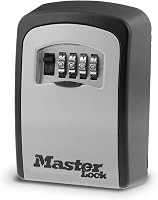
Fayleeko combines a wall-mounted design with a 4-digit code and space for up to 5 shorter keys. It suits homes that need controlled access for family, guests or service workers.
Pros
- Holds up to 5 shorter keys
- Wall hardware included
- Weather protection
Cons
- Keys must be shorter than 3.35 in
- Code must be recorded after resetting
Fayleeko is the best fit for a home that needs one fixed access point. Its 4-digit mechanical code gives authorized users a code-based way to reach a spare key without carrying a physical copy.
The box holds up to 5 house keys shorter than 3.35 inches. Its 3.34 x 2.52 x 1.38 in interior can also hold car keys or access cards, but measure longer keys before choosing it.
The body uses zinc alloy and stainless steel, with an ABS shell for protection from rain, dust, snow and sun. Wall mounting uses 4 screws and 4 nylon expansion plugs, and those items are included with the box.
Record the code after every reset. A combination lock is only useful when authorized users can open it and unauthorized people cannot easily learn the number.
Choose Fayleeko for a standard home, garage or garden entry where a compact wall-mounted box is enough. Its main limit is the shorter-key requirement.
RUDY RUN Key Lock Box for Outside: Best for outdoor shared access
- 4-digit combination lock
- Holds at least 5 keys or small access items
- Wall mount or hanging use
- Aluminum, stainless steel and zinc
RUDY RUN gives you several placement options for shared access. Its 4-digit code and protective cover suit outdoor key handoffs for trusted guests, family and service workers.
Pros
- Flexible mounting options
- Weather protection for dials
- At least 5-key capacity
Cons
- Larger than compact key boxes
- A code still needs to be shared carefully
RUDY RUN is the best outdoor choice when several trusted people need shared access. Its 4-digit combination lock supports more than 10,000 possible combinations, and the box holds at least 5 house or car keys.
The 2 x 4 x 5 in body is larger than Fayleeko's stated dimensions. That extra space also suits key fobs, credit cards, USB devices or access tags.
You can wall mount it with 4 screws and 4 nylon expansion plugs, or use it on a door handle, gate or railing. A protective cover helps shield the dials from dust, rust, sunlight, rain and snow.
The zinc alloy, stainless steel and aluminum construction is aimed at outdoor use. RUDY RUN also includes a lifetime limited warranty, which may matter if the box will face regular weather exposure.
Pick it for a rental, office, garage or shared property where flexible placement matters. Use a wall mount when you want a more permanent and less visible setup.
GRIFEMA Key Lock Box: Best for flexible mounting
- Resettable 4-digit mechanical code
- Wall mount or hanging shackle
- Holds 5 house or car keys
- Weather shield
GRIFEMA works when you want a permanent wall position or a removable hanging setup. The separate shackle supports temporary placement on a door, gate, railing or garage handle.
Pros
- Wall and hanging installation
- Resettable code
- Weather-resistant design
Cons
- One storage compartment
- Hanging use may be less discreet than wall mounting
GRIFEMA is the best fit when you want one lockbox that can hang temporarily or stay on a wall. Its detachable metal shackle supports use on doors, gates, railings or garage handles, while mounting hardware supports a fixed position.
The box has one compartment for up to 5 house or car keys, key fobs, credit cards or USB drives. Its resettable 4-digit mechanical code gives you a way to change access when the authorized-user group changes.
The zinc body has a weather shield for the dials and is designed for rust and corrosion resistance. The gray box measures 4.53 x 3.74 x 3.74 inches.
Look for the removable shackle inside the box before deciding how you will install it. Hanging use is useful for temporary access, but wall mounting may be the better choice when you want a stable location.
Choose GRIFEMA for a vacation rental, office or home where placement may change. It is less suited to buyers who need more than one storage compartment.
Puroma 2 Key Lock Box Combo Wall-Mounted: Best for a two-pack setup
- 2 wall-mounted lockboxes
- 4-digit combination codes
- Aluminum construction
- Mounting hardware included
Puroma gives you 2 wall-mounted boxes for separate entrances, properties or access groups. Each uses a resettable 4-digit code and is designed for house-key storage.
Pros
- Two boxes in one pack
- Weatherproof and corrosion-resistant design
- Wall hardware included
Cons
- Wall mounting only
- The data lists water resistance as not water resistant
Puroma is the best choice when you need 2 separate wall-mounted boxes. Use one at a home entrance and another at an office, rental or second property, with a different code for each access point.
Each box uses a resettable 4-digit mechanical code with 10,000 possible combinations. The aluminum body is described as rustproof, corrosion-resistant and weatherproof, while the package includes 4 screws and 4 expansion plugs for each wall-mounted setup.
The 3.7 in chamber depth gives space for house keys. The product is also intended for apartment entrances, garages, rental houses and holiday houses.
Puroma's data lists the pack as 2 count and water resistance as not water resistant. That distinction matters if the boxes will sit in direct rain, so choose a sheltered position and keep water exposure in mind.
Pick Puroma when two entry points matter more than a hanging option. It is a practical way to keep separate access groups from sharing one box and one code.
ISEYOU Lock Box for Keys with Code: Best for multiple keys
- 12-digit mechanical keypad
- Holds up to 10 standard door keys
- 4.13 x 2.36 x 1.77 in interior
- Wall mount
ISEYOU is the capacity pick for households or rentals that need to organize more keys. Its large buttons and internal anti-slip hook help with repeated shared access.
Pros
- Highest stated key capacity
- 12-digit keypad
- Internal anti-slip hook
Cons
- Wall mounting only
- Larger body needs more wall space
ISEYOU is the best key storage lockbox here for households or rentals with many keys. Its interior measures 4.13 x 2.36 x 1.77 inches and holds up to 10 standard door keys, car key fobs or access cards.
The 12-digit mechanical keypad uses large buttons, which may be easier to enter than small rotating dials. An internal anti-slip hook helps keep several keys organized instead of leaving them loose in the compartment.
The wall-mounted box measures 2.36 x 3.74 x 5.9 inches and uses an alloy steel and aluminum body. A waterproof ABS cover protects the keypad area from rain and dust, while the included installation kit supports mounting to a wall or doorframe.
ISEYOU recommends a 4- to 8-digit password for easier security and memorability. Write down or photograph the code after setting it, then store that record somewhere safe.
Choose ISEYOU for a larger shared key set. Its bigger body needs more wall space than compact boxes, so measure the mounting area first.
KeyGuard SL-591 Car Window Punch Button Lock: Best for vehicle access
- Push-button keypad
- Car-window mounting
- Solid zinc construction
- Fits keys, fobs, cards and IDs
KeyGuard is designed for access near a vehicle rather than a fixed wall. Its push-button keypad suits rideshare, short-term vehicle rental and outdoor activities.
Pros
- Vehicle-specific mounting
- Large push buttons
- Protective cover
Cons
- Not a wall-mounted home lockbox
- Heavier at 1.2 lb
KeyGuard is the best option when the access point is a vehicle.
The SL-591 mounts to a car window and uses large push buttons instead of small dials, making it suited to rideshare, short-term vehicle rental and outdoor activities.
Large buttons can suit gloves, cold hands or anyone who finds small dials fiddly.
The solid zinc box measures 2.6 x 4.5 x 5 inches and weighs 1.2 lb.
That weight is easy to handle for a vehicle based box, but it is heavier than a small wall mounted key box.
Its interior measures 4 x 2-3/8 x 1-1/8 inches with a 4-3/8 in diagonal, giving room for keys, key fobs, credit cards or IDs.
Check the shape of your fob or card before you choose, because diagonal space can matter more than the headline length.
A protective rubber cover helps protect the keypad from the elements.
The cover also keeps the buttons out of plain sight, which can help when the box sits in a shared or public area.
The box secures automatically when closed and includes a car key lock box as the included component.
Closing it fully after each use keeps the routine simple for drivers, renters and guests who may be in a hurry.
This is not a substitute for a wall-mounted house key box.
Choose it when the vehicle itself is the access point and you need a keyless way to store items near that vehicle.
For a fixed front door, a wall mounted model will usually suit the routine better.
Vaultz Locking Storage Chest with Dual Combination: Best for larger valuables
- Dual combination locks
- 17.52 x 12.4 x 4.25 in interior
- Laptop and tablet storage
- Mesh interior netting
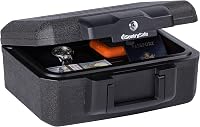
Vaultz is a storage chest for laptops, tablets and valuables, not a compact spare-key box. Its larger interior and dual locks make sense when key storage is part of a broader security need.
Pros
- Large interior
- Dual combination locks
- Cable grommet and loop tether
Cons
- Too large for a single spare key
- Floor mount rather than wall mount
Vaultz is best for buyers who need broader locked storage, not just a spare-key container. Its 17.52 x 12.4 x 4.25 in interior fits most laptops and tablets, with room for a wallet, phone and other small essentials.
The storage chest uses dual combination locks and has a capacity of 918.67 cubic inches. Mesh netting helps separate items, while dual exterior handles make it easier to move between a dorm, home or travel setting.
A built-in laptop security cable grommet and double loop tether add options for securing the chest with a compatible laptop security cable. The chest is made from aluminum, steel and chrome and has a floor-mount design.
At 6.5 x 13.5 x 23 inches, it is much larger than the other picks. It makes sense when keys are only one part of a larger storage need, such as keeping documents, devices and valuables together.
Choose Vaultz for a dorm, home office or travel setup. Choose a smaller wall-mounted box when the only goal is controlled access to one or more house keys.
How to choose a key storage lockbox for a door
The best key storage lockbox for a door should match the number and length of your keys, the mounting surface and the people who need access. Start by measuring the longest key and the clear wall space around the entry.
A 4-digit code is common across Fayleeko, RUDY RUN, GRIFEMA and Puroma. ISEYOU uses a 12-digit keypad with a recommended 4- to 8-digit password, while KeyGuard uses large push buttons for vehicle access.
Wall mounting gives you a stable location, but it requires a suitable surface and careful placement. Read our guide to door locks and reinforcement before choosing a location near the entry.
The lockbox should not block the door, cover a light or sit where visitors can easily watch code entry. Use a position that authorized users can reach without making the code visible from the street.
For a stronger entry setup, review what is a door strike plate and check that the door hardware itself is secure. A lockbox protects the stored key, but it does not replace a sound door and frame.
Wall-mounted key storage lockbox or portable key safe?
A wall-mounted key storage lockbox is better for a fixed home, office or rental entrance. Once installed, it stays in one place, so regular users learn the spot and the spare key stays where you expect it.
A portable key safe is better when the storage point changes, or when you need to carry the box between locations. That flexibility can suit travel, seasonal use or a second property where permanent fixing is not wanted.
GRIFEMA supports wall mounting and hanging use. Its detachable shackle lets the same box move from a wall to a door, gate, railing or garage handle.
RUDY RUN can also be mounted or hung from a door handle, gate or railing. That range helps when wall space is limited or the best entry point is not a flat wall.
For a broader portable comparison, see our guide to the best portable key safe. Portable models vary in size and locking style, so check capacity and mounting before treating one as a like-for-like swap.
A wall-mounted box needs more planning because you must choose a secure surface and install the hardware. Pick a spot authorized users can reach easily but passersby will not find obvious.
The fixing should suit the surface, and included screws and plugs should match the wall or frame you plan to use. Place the box so the door, gate or handle can still move freely and the code can be entered without being watched.
Portable use is quicker to change, but a hanging box may be more visible or easier to remove. Visibility matters more at a street-facing entry, while removal matters more where many people come and go.
A wall mount can feel more settled and discreet, yet it commits you to one position. Hanging use gives freedom to reposition, yet the box may swing, bump or sit where it is easier to spot.
Do not confuse a key lockbox with a hidden wall safe for general valuables. A key lockbox is sized for keys, fobs and small access items, not for documents, cash or larger valuables.
Our guide on the difference between a wall safe and a floor safe explains why larger valuables need different storage.
Choose wall mounting for a stable daily routine, and portable or hanging use when location needs to change. That trade-off, rather than price or headline capacity alone, should drive the decision.
How to manage codes and shared access
Give the code only to people who need access, and change it when that group changes. A cleaner, guest, pet sitter or tenant who no longer needs entry should not keep an old code.
Keep a private record of the current code because authorized users still need to remember the combination. Store that record away from the box itself, since a note beside the lockbox defeats the purpose of the code.
Avoid a code that is easy to guess from the property address or a public date. An obvious sequence or a number tied to the home is simple to try for someone who knows the area.
Enter the code with your body positioned to reduce visibility from windows, cameras or walkways. Stand close to the box, shield the dials or keypad and do not say the code aloud.
That habit matters most at a front door, where neighbors, visitors and passersby may be within view.
Share a code through a private channel rather than leaving it on a note or message thread others can see. Tell each authorized user to close the box fully after taking or returning the key.
A box left open or not fully secured stops protecting the spare key, even if the code is strong.
Test the opening process after installation with the door closed and the key inside. Make sure the key fits the intended lock and the box opens without the door, gate or railing interfering.
Try the full routine as a guest would, including reaching the box, entering the code and closing it again. That test can reveal a poor position, a tight fit or a key that is too long for the interior.
Check that the stored key turns smoothly in the lock, since a sticking spare key is no use in an emergency. Test the box in daylight and in low light, because small dials or buttons can be harder to read at night.
If the entry is used after dark, consider whether users can enter the code without a phone torch.
Review the code and authorized list when a guest leaves, a tenant changes or a service provider finishes work. Resetting the code after each change keeps access tied to the current group rather than past users.
For homes moving from physical keys to electronic entry, compare options in our best keypad locks for front doors guide. A keypad lock may reduce the need for a spare key, while a lockbox keeps a physical backup available.
Used together, the systems can balance convenience for daily entry with a simple backup for trusted visitors. Keep the routine simple, private and reviewed, and the lockbox will do the job it is meant to do.
Which key storage lockbox should you buy?
Choose Fayleeko for a compact wall-mounted box that holds up to 5 shorter keys.
Choose RUDY RUN for outdoor shared access, GRIFEMA for wall or hanging placement, and Puroma when you need 2 separate boxes.
Each of those choices follows a different routine, so let the access pattern guide you rather than the longest feature list.
RUDY RUN suits shared outdoor use where flexible placement matters.
GRIFEMA suits a home, rental or office where you may want to hang the box now and wall mount it later.
Puroma suits two entrances or two properties, since separate boxes can carry separate codes for separate groups.
Choose ISEYOU for up to 10 standard door keys, KeyGuard for vehicle access and Vaultz for laptops, tablets and broader locked storage.
ISEYOU is the pick when the shared key set is larger than 5 keys.
KeyGuard is the pick when the access point is a car window rather than a wall.
Vaultz is the pick when keys are only part of a larger need to lock away devices, documents and valuables.
If you need a double-cylinder deadbolt as part of the same security plan, read what is a double cylinder deadbolt.
Think of the deadbolt and the lockbox as separate layers, one for the door itself and one for controlled spare key access.
For most homes, Fayleeko offers the clearest balance of capacity, wall mounting and code access.
Its zinc alloy and stainless steel body, resettable 4-digit code and included wall hardware suit a standard home entry.
Measure your keys and mounting area first, then choose the box that fits your access routine.
Check key length against the interior, since Fayleeko holds keys shorter than 3.35 in.
Check wall space too, because a larger box such as ISEYOU needs more room than a compact wall mounted model.
If the box will hang, check the door, gate or railing as well as the wall.
If the box will sit outside, check weather protection and how exposed the dials or keypad will be.
Then list who needs the code, how often they will use it and when that group may change.
That short list will point you to the right capacity, mounting style and code type for your home.
Our top 3 picks at a glance
-
1
-
2
-
3
Frequently asked questions
What is the best key storage lockbox for most homes?
The Fayleeko Key Lock Box Wall Mounted is the best key storage lockbox for most homes in this group. It has a 4-digit code, wall mounting, weather protection and room for up to 5 house keys shorter than 3.35 inches.
Choose a different model if you need a two-pack, hanging shackle or higher capacity.
How many keys should a key storage lockbox hold?
Choose capacity based on the keys you need to share, not only the number of people using the box. Fayleeko, RUDY RUN and GRIFEMA suit about 5 keys, while ISEYOU holds up to 10 standard door keys.
Check key length and interior dimensions before ordering.
Are wall-mounted key lockboxes safer than hidden keys?
A wall-mounted key lockbox gives you controlled access through a code instead of leaving a key under a mat or nearby object. It still needs a careful location, a code shared only with authorized users and secure installation.
Read our guide to are key safes secure for more context.
Should a key lockbox go outside?
A key lockbox can go outside when its design supports outdoor use and the mounting location is protected as much as possible. RUDY RUN and GRIFEMA include weather-focused features, while Puroma's data lists water resistance as not water resistant.
Keep the code private and check the box during routine home-security checks.