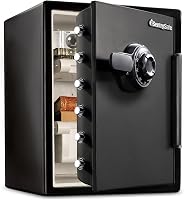
How to Choose a Floor Safe with a Key Lock
Choose a floor safe with a key lock by checking the lock type, interior depth, door clearance, mounting method and usable capacity. A keyed override can add access flexibility, but it doesn't make an electronic or combination safe a fully keyed safe.
On this page (8 sections)
- Is a key lock the primary lock or an override?
- How much installation depth does a floor safe need?
- How do you compare usable capacity?
- Which lock style fits your routine?
- Do floor safes need fire and water protection?
- What should you check before installation?
- How should you store the key?
- Which floor safe should you choose?
A floor safe with a key lock should be chosen by its actual access method, interior depth, mounting design and capacity. A key may be the main lock, or it may only provide emergency access beside an electronic keypad.
Before choosing, decide what you need to protect and how often you will open the safe. Documents need a different interior shape from jewelry, cash, passports or electronic storage devices.
Think about who will use the safe on a daily basis and who will need entry in an emergency. That choice affects whether a simple key, a dial, a keypad or a keyed backup is the more practical option.
Also consider where the safe will sit and how it will be fixed in place. A heavy steel cabinet that is bolted down needs a planned route into the room and a surface that can support it.
Check the usable space inside before you focus on the outside size. Shelves, trays and drawers can help with small items, while a tall open chamber can be better for folders and document boxes.
Match the lock and the interior to your routine, not only to the asking price or the stated capacity. A safe that is awkward to open or hard to organize can become less useful over time.
Is a key lock the primary lock or an override?
A key lock can mean two different things. Some safes use a key as the main access method, while others combine a keypad or dial with a key that works as a backup or secondary control.
The difference matters in daily use. A primary key lock means you must protect and organize the key, while an electronic safe may offer faster routine entry but still need batteries and emergency access planning.
A keyed override also doesn't mean the safe is a simple key-only design. The FOWORE model combines an electronic keypad with emergency override keys and an external battery pack for keypad power when internal batteries run low.
The SentrySafe SFW205GQC combines a digital combination lock with a secondary locking key. Its key can disable the primary lock, which may help when more than one person knows the combination.
For broader home access planning, compare your safe location with your door deadbolt. A safe key should be stored securely, not left beside the safe or in an obvious drawer.
How much installation depth does a floor safe need?
Installation depth depends on both the cabinet and the space around it. Measure the safe's outside depth first, then compare it with the available opening and the interior chamber depth.
The SentrySafe SFW205CWB measures 18.6 in deep externally and has an interior chamber depth of 11.9 in. Its 2.05 cu ft capacity suits larger document storage, but the cabinet needs a substantial installation area.
The SentrySafe SFW205GQC has the same 19.3 in outside depth and 11.9 in interior depth. Its door also needs 17.5 in of clearance to open fully, so a wall, cabinet or nearby object can affect placement.
The FOWORE model measures 12.2 in deep externally, with a 12.2 in chamber depth in its specifications. Its stated 3.6 cu ft capacity offers a different balance of cabinet shape and storage volume, but measure the complete installation route before choosing.
A floor safe can be difficult to move after installation. If your proposed location is above ground level, read what should be checked before putting a heavy safe on an upper floor before carrying it upstairs.
How do you compare usable capacity?
Usable capacity is the room inside after the door, walls, shelves and organizers take space. Compare interior width, height and depth, not only the cubic-foot number.
The SentrySafe SFW205CWB has an interior chamber measuring 14.8 in wide, 11.9 in deep and 19.6 in high. Its 2.05 cu ft capacity, tray and drawer can suit documents and smaller valuables that need separate organization.
The SentrySafe SFW205GQC has the same 14.8 in width, 11.9 in depth and 19.6 in height. Its interior light, drawer, file organizer and door storage features can help when you need to sort documents and valuables inside a tall cabinet.
The FOWORE model has a 3.6 cu ft stated capacity and an interior size of 12.2 in deep, 13.8 in wide and 19.7 in high. Its removable shelf lets you divide the space for legal documents, passports, jewelry and other valuables.
Capacity alone doesn't tell you how easy the safe will be to organize. A shelf or drawer can make smaller items easier to find, while a clear open chamber may suit folders or larger objects.
For a smaller installation area, compare a best small floor safe guide. If you need to store bulky items under furniture instead, a large under bed safe may fit the room better.
Which lock style fits your routine?
Choose a dial combination when you want mechanical access without keypad batteries. The SentrySafe SFW205CWB uses a fixed combination, so it suits buyers who prefer a preset dial rather than setting a personal digital code.
That fixed setup can suit a household where one or two adults will open the safe and can keep the combination private. It removes battery checks from routine use, but it also means the code cannot be changed in the same way as a custom digital code.
The SFW205CWB also uses six live-locking bolts, steel construction, a pry-resistant hinge bar, a tray, a drawer and bolt-down hardware. Those features focus on keeping the cabinet closed and fixed in place, rather than on offering multiple ways to open it.
Choose a digital combination with a key backup when you want keypad entry and another access path. The SentrySafe SFW205GQC uses a custom digital combination and a secondary locking key, and its battery guidance calls for 4 high-quality alkaline AAA batteries.
A custom code can be easier to share with selected users than a fixed dial code, and the secondary key gives a planned backup if the keypad is not available. The product description also notes that the key can disable the primary lock, which may matter when access needs to change.
That option fits homes where daily entry should be quick and where more than one person may need access. It asks for more care with batteries, because the keypad depends on them and generic or rechargeable batteries may not support long term use as well.
The SFW205GQC also has six live-locking bolts, steel construction, a pry-resistant hinge bar, a drawer, a file organizer, interior light and bolt-down hardware. The light and organizer can help at night or when the interior is full of folders and small items.
Choose the FOWORE design when flexible access matters more than a key-only setup. It combines an electronic keypad, emergency override keys and an external battery pack, plus silent mode and an alarm that activates after 3 incorrect codes.
Three access options can reduce the risk of being locked out if a code is forgotten or batteries run low. The external battery pack is aimed at powering the keypad when internal batteries are low, while the override keys provide a separate entry route.
Silent mode may suit use in a bedroom or office where beeps would be distracting. The alarm after repeated incorrect codes adds a deterrent, but it also means a mistaken entry pattern needs care from regular users.
The FOWORE model uses three solid 20mm anti-pry locking bolts and can be permanently mounted to the floor or wall. That mounting choice can help stop removal, but it should be planned before the safe is placed.
Keep the access method aligned with the people who need entry. A key can be misplaced, a combination can be shared, and a keypad depends on working batteries, so each option needs a simple storage and access plan.
Write down who knows each code and where each key is kept, then review that plan when household members change. A clear plan is part of the security, because the lock only works if access is controlled in daily use.
Do floor safes need fire and water protection?
Fire and water protection should match what you plan to store. For paper records and digital media, compare the stated protection time and water depth instead of treating every fireproof safe as equivalent.
Paper can be ruined by heat and moisture, while drives and media can fail after exposure that paper might survive. The right level of protection depends on whether the contents are replaceable, sentimental or needed for legal and financial records.
The SentrySafe SFW205CWB and SFW205GQC are UL Classified for 1 hour at 1700°F and ETL Verified for 24 hours in water up to 8 in. Both are described for documents, valuables, DVDs and USBs.
That one hour rating is longer than a short fire rating, and the water rating is tied to a set time and depth. Buyers who store irreplaceable papers or digital media should compare those stated limits with likely risks in the home.
Both SentrySafe models are also described as ETL Verified to withstand a 15-foot fall during a fire and remain closed. That detail matters because a safe that opens after heat or impact would lose much of its protective value.
The FOWORE model is described as offering 35 minutes of fire protection. Its product information does not give the same water-protection detail, so buyers focused on flood protection should compare that difference carefully.
A shorter stated fire time may still suit some uses, but it is not the same as a one hour classification. If flood risk is a main concern, the absence of a stated water rating should be treated as a real gap in the comparison.
Fire protection does not replace careful placement. Avoid areas where standing water, plumbing leaks or blocked access are likely, and keep important papers in an organized container inside the safe.
A raised, dry and accessible spot can make emergency retrieval easier and can reduce exposure to leaks. Keep the safe away from pipes and low spots where water can collect, even when the cabinet has a water rating.
Organize the interior so the most damage-sensitive items are not loose at the bottom. A tray, drawer or file organizer can keep papers, drives and small valuables separated and easier to move as a group.
Check the safe from time to time for signs of moisture, rust or damage to the seal and lock. Cleaning the outside and keeping the area dry helps the cabinet stay usable and makes future inspection simpler.
For a comparison of cabinet location and construction, read What Is the Difference Between a Wall Safe and a Floor Safe?.
What should you check before installation?
Check the entire route, opening space and mounting surface before bringing a safe home. A cabinet that fits the final spot may still fail at a doorway, stair turn or tight hallway.
Measure the following:
- The narrowest doorway and hallway on the route.
- The safe's full outside width, depth and height.
- Door swing or opening clearance at the final location.
- The surface available for floor or wall mounting.
- Space to kneel, reach inside and remove stored items.
- The location where you will keep the key, override key or battery supplies.
The SentrySafe models weigh 124.8 lb for the black SFW205CWB and have steel construction. The FOWORE model weighs 38 lb and is described for permanent floor or wall mounting, so the mounting plan and surface still matter even though it is lighter.
A lighter cabinet can be easier to carry, but permanent mounting still needs a solid surface and the right hardware. Do not treat a lower weight as a reason to skip checks on studs, fixings or floor condition.
Do not assume a floor safe belongs on an upper floor simply because the room has enough open space. Check the structure, route and installation method first.
How should you store the key?
Store the key away from the safe but somewhere you can reach during an emergency. A hidden location that is too difficult to remember can delay access when you need documents quickly.
Pick a place that trusted adults can find without searching the whole house. The location should also be private enough that visitors or casual household users cannot find it by chance.
Do not place the key in the same drawer as the safe instructions or beside the keypad. Use a controlled location, limit who knows it, and avoid labeling it in a way that identifies the safe.
Keep spare keys and battery supplies separate from the main key where possible. That separation can slow a casual search, while still leaving a planned route for authorized access.
Think about what happens if the main user is away. A second trusted person should know the access plan, but that knowledge should be limited and recorded in a private way.
Avoid keeping the key on a hook, in a car or in a bag that leaves the house often. Those spots increase the chance of loss and make it harder to know who has handled it.
Check the storage spot after guests visit or after rooms are cleaned. Keys can be moved during normal household activity, so a quick check can prevent a later lockout.
A separate best key storage lockbox can help you organize spare keys, but the safe key still needs a location that fits your household's security plan.
Use a lockbox only if its own lock and placement fit the risk at home. A storage device that is easy to find and easy to open may not improve security.
Which floor safe should you choose?
Choose the SentrySafe SFW205CWB if you want a dial combination, 2.05 cu ft of space, fire and water protection, and bolt-down hardware. It suits buyers who want mechanical access without keypad batteries.
Choose the SentrySafe SFW205GQC if you prefer digital entry with a secondary key, interior lighting and the same stated 2.05 cu ft capacity. Its file organizer and drawer can help with sorting papers and small valuables.
Choose the FOWORE if you need more stated capacity, a removable shelf and three access methods. Its 35-minute fire-protection description differs from the SentrySafe models' stated 1-hour classification, and its product information does not provide the same water-protection detail.
The best floor safe with a key lock is the one whose key role, depth, capacity and protection match your storage plan. Measure the installation space first, then decide whether you want a key-only approach, a keyed backup or a flexible electronic system.
For documents and media that must survive heat and water, the longer stated SentrySafe ratings may be the safer match. For flexible daily access and added stated capacity, the FOWORE design may fit a different set of priorities.
Do not choose on capacity alone. Compare interior depth, door clearance, weight, mounting method and the way each lock is used each day.
After you choose, plan the key location, battery checks and mounting surface before delivery. That early planning can prevent a safe that fits the room but works poorly in real life.
Frequently asked questions
What should I look for in a floor safe with a key lock?
Check whether the key is the primary lock or an emergency override, then compare exterior depth, interior depth, door clearance, mounting method and usable capacity. Also check fire and water protection if you plan to store documents, digital media or other items that need extra protection.
Are floor safes with key locks more secure?
A key lock changes how you access the safe, but it does not automatically make a safe more secure. Compare the full design, including locking bolts, steel construction, hinge protection, mounting options and how you will store and control the key.
How deep should a floor safe be?
Choose depth based on the largest item you plan to store and the available installation space. Compare the outside depth with the interior chamber depth, because insulation, walls and the door reduce usable room.
Measure the opening and access route before choosing.
Can a floor safe be mounted to the floor?
Some floor safes include floor-mount hardware or support permanent mounting, while others are described for wall mounting or both. Confirm the mounting method, measure the installation area and check the surface before placing a heavy safe.