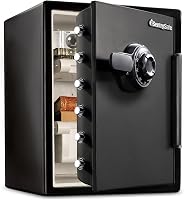
How to Choose a Fireproof Safe on Wheels
Choose a fireproof safe on wheels only when its casters, floor support, door clearance and anchoring plan match its loaded weight. Confirm the fire rating and usable interior space before choosing mobility.
On this page (9 sections)
- What should you check before buying a fireproof safe on wheels?
- How much floor support does a fireproof safe on wheels need?
- Do wheels weaken theft protection?
- How do caster locks and anchors work together?
- What fire certification matters for a wheeled safe?
- Which size works best on a rolling base?
- How should you move a heavy safe?
- What should you store in a fireproof safe on wheels?
- Is a fireproof safe on wheels right for your home?
A fireproof safe on wheels should combine a verified fire rating with stable movement, strong floor support and a clear plan for locking the wheels or anchoring the cabinet. Before you buy, compare loaded weight, caster design, door clearance, usable interior space and the protection claim.
Those checks matter because a safe is heavy before you add contents. Papers, folders, cash and small valuables add weight that changes how the cabinet pushes, stops and turns.
Wheels help for cleaning, access or rearranging a room. They cause trouble if the cabinet rolls during use, tips on an uneven floor or becomes easier to remove.
A rolling safe needs more planning than a fixed safe. You must think about every trip, from the delivery route to the daily parking corner, not just the final spot.
Measure more than the cabinet. Allow room for casters, door swing, your hands and the space needed to lock the wheels or set a restraint before opening the safe.
Treat mobility as part of installation. Decide where the safe will sit, how often it must move and whether theft resistance matters before choosing a wheeled base or factory-installed casters.
The setup suits renters, people who rearrange furniture often and anyone who needs to reach behind the safe for cleaning. Those who mainly need removal resistance may prefer a fixed position even if access is harder.
Hard, level flooring gives wheels a predictable surface. Soft or uneven flooring can make a loaded cabinet drift, rock or sink, which is harder to correct once the safe is full.
Check fire protection separately from mobility. Look for named certification, test temperature, protection time and protected contents.
A mobile base does not improve those claims.
Give usable space a careful look. Exterior size shows if the safe fits the route and parking spot.
Interior size shows if files, folders and containers fit without forcing the door or crowding shelves.
Set up the safe before loading it fully. Lock the wheels, confirm it sits level, check door operation without strain and test the lock in its normal position.
Keep care simple and steady. Keep wheels clear of dust and debris, check fasteners after a move and wipe contact points so grit does not grind into casters.
Wheels add freedom and ease household tasks, but they can reduce removal resistance and make stability depend on good parking habits. Planning for both sides from the start lets mobility work without creating a weak spot.
What should you check before buying a fireproof safe on wheels?
Check caster capacity, wheel locks, frame strength, floor support and safe weight before focusing on storage volume. A safe that rolls easily when empty may be difficult to control after papers, valuables and other contents are added.
Ask these questions before ordering:
- What is the safe's empty weight?
- What weight can each caster support?
- Does the total caster rating include a safety margin?
- Do the wheels lock in more than one direction?
- Does the safe remain level when the door is open?
- Can the wheels pass over thresholds and flooring changes?
- Can you anchor the cabinet without removing the rolling base?
- Will the loaded safe fit through the route where it must move?
- Does the door need extra clearance to open fully?
The product examples in this guide range from 38.8 lb to 90 lb before contents. A rolling platform must support the safe, its contents and the forces created when you push, stop or turn it.
Do not treat a wheel diameter or a product's portability as proof of safe movement. Stability depends on the base, the center of gravity, the floor and how the door changes the balance when open.
How much floor support does a fireproof safe on wheels need?
A fireproof safe on wheels needs a level, hard surface that supports its full loaded weight without flexing. Carpet, soft flooring and uneven transitions can make the cabinet harder to control and can reduce the contact area of the wheels.
Measure the floor space before placing the safe. Include the caster footprint, the door swing, room for your hands and enough space to inspect or clean behind the cabinet.
A heavy safe concentrates weight at a few small contact points. Check whether the flooring can handle that pressure, especially on raised floors, older wood floors, platforms or areas near a floor edge.
Use a rigid plate or platform only when it is rated for the load and remains stable during movement. A wider base can spread the load, but it can also increase the turning area and create a raised step.
Keep the cabinet level after parking it. A safe that rocks can place extra force on the door, hinges and locking parts, while a sloped floor can encourage movement when the wheels are unprotected.
Do wheels weaken theft protection?
Wheels can weaken the removal resistance of a safe if they allow someone to move the entire cabinet without tools. Mobility is useful for household access, but it is not the same as security against removal.
A wheeled safe should have a clear parking method. That may include locking casters, a fixed recess, a floor anchor or a separate restraint designed for the cabinet and its base.
Anchoring creates a trade-off. A fixed anchor improves resistance to removal, while an unanchored safe is easier to relocate for cleaning, room changes or emergency access.
Do not drill into the cabinet or its fire barrier without approved instructions. An incorrect hole can damage protected areas, weaken the cabinet or interfere with the door and locking system.
If you need help deciding where a safe belongs, compare Why Do Safe Exterior Dimensions Differ So Much from Usable Interior Space? before you measure the room.
How do caster locks and anchors work together?
Caster locks keep the wheels from rolling, while anchors resist lifting, sliding or removal. A wheel lock alone is not the same as anchoring, especially for a heavy cabinet that contains valuable documents.
Use the following decision rule:
| Your main need | Better setup |
|---|---|
| Move the safe often | Locking casters with a stable, level parking area |
| Move it occasionally | Heavy-duty casters plus a removable restraint or planned anchor point |
| Resist removal | Floor anchoring or a fixed installation |
| Protect a rental floor | A rated platform that spreads weight without permanent drilling |
| Use the safe on uneven flooring | Relocate it to a level hard surface before loading it |
A restraint must connect to something that can resist the force of movement. Attaching a strap to a weak shelf, trim board or light furniture does not create meaningful removal resistance.
Fixings can look tidy on the surface while still lacking a solid base. They need to hold against a heavy cabinet being pushed or pulled.
When you plan an anchor point, check what is behind the surface as well as the surface itself. Flooring, joists, studs and load paths all affect whether a fixing will hold or simply give way under pressure.
Caster locks and anchors solve different parts of the problem. Locks stop the wheels from turning, while anchors resist lifting, sliding and full removal.
Using one does not automatically cover the other.
For frequent moves, locking casters and a level parking area may be enough. For occasional moves, a removable restraint can add control without making the safe permanent.
For removal resistance, floor anchoring or a fixed installation is the stronger choice. That suits owners who value security over easy relocation and who can accept a more permanent setup.
Check the door position during installation. A wide-open door can shift the center of gravity and may make the safe harder to control if the wheels are not locked.
Test the setup with the door open, not just closed. That is the moment when balance changes most, and when a small slope or loose wheel is most likely to show up.
What fire certification matters for a wheeled safe?
Choose a fireproof safe by its named certification, test temperature, protection time and protected contents. Wheels do not improve the fire rating, so compare the cabinet's fire claim separately from its mobility.
The UL mark and classification details can be checked through UL Solutions. For ETL verification information, use Intertek's ETL Listed Mark directory.
A 1-hour claim at 1700°F gives you a different benchmark from protection for up to 30 minutes at high temperatures. The protected contents also matter because paper, DVDs and USB drives can have different storage needs.
Water protection is a separate question. A safe can have a fire claim without a waterproof claim, and a document box designed for water exposure may not provide the same fire duration as a larger fire safe.
Read the certification wording closely. “Fireproof” is a useful starting description, but the test duration, temperature and media protection tell you more about what the safe is designed to protect.
Which size works best on a rolling base?
Choose a size that leaves room for your documents without making the rolling setup difficult to control. Exterior dimensions show whether the safe fits the route, while interior dimensions show whether your folders and valuables fit inside.
Measure both sides of the decision:
- Measure the doorway, hallway and turns on the delivery route.
- Measure the final parking space.
- Check the door's required opening area.
- Compare interior width, depth and height with your folders and containers.
- Add the safe's contents to its empty weight.
- Check the platform or caster rating against that total.
The SentrySafe SF123ES has a 1.23 cubic foot capacity, an 85 lb weight and exterior dimensions of 16.3 W x 19.3 D x 17.8 in H. Its interior measures 12.6 W x 11.9 D x 13.8 in H, with a shelf and door pocket for organization.
Its 4 live-locking bolts, pry-resistant hinge bar and bolt-down hardware support a more fixed installation. The product details identify freestanding and tabletop mounting, so confirm the exact caster or rolling-base plan before treating it as a wheeled safe.
The SentrySafe HD4100 has a 0.65 cubic foot capacity, weighs 38.8 lb and measures 13.5 D x 15.5 W x 14.3 H in. Its interior measures 12 W x 8.1 D x 11.5 H in and is designed for hanging file folders and important paperwork.
It uses a key lock and includes 2 keys. Its floor-mount design makes the installation plan important if you want to add mobility, because a rolling base may change how the safe sits and how it is restrained.
The SentrySafe SFW123GDC has a 1.23 cubic foot capacity, weighs 90 lb and measures 19.3 D x 16.3 W x 17.8 H in. Its interior measurements are 12.6 W x 11.9 D x 13.8 H in, and the door requires 14.75 in of clearance to open fully.
This model uses a digital keypad with a secondary locking key. It also has 4 live-locking bolts, a pry-resistant hinge bar and a bolt-down kit, so a mobile setup should preserve both door clearance and the intended mounting method.
For more ways to compare cabinet height and interior room, see our guide to best fireproof safe tall options. If you need more volume for household records, our best large home safes guide can help you compare larger formats.
How should you move a heavy safe?
Move a heavy safe with the door closed, the wheels locked when parked and enough help for the loaded weight. Do not use the open door as a handle or push from a point that can twist the cabinet.
Before moving it:
- Remove loose contents and shelves if the instructions allow it.
- Close and secure the door.
- Inspect each caster, wheel lock and fastener.
- Clear the route of rugs, cords and small objects.
- Protect thresholds and flooring.
- Use a rated moving aid for the safe's total weight.
- Keep hands and feet away from pinch points.
- Move slowly through turns and doorways.
A 38.8 lb cabinet is easier to control than a 90 lb cabinet, but neither weight includes the contents. Paper files can add substantial load, and a crowded cabinet may roll differently from an empty one.
Use a second person to watch the rear wheels and door side. Stop if a wheel lifts, the base flexes or the cabinet starts to lean.
After moving, check the cabinet again. Confirm that it is level, the door closes normally, the locks engage and the wheels remain locked or restrained.
What should you store in a fireproof safe on wheels?
Store items that need protection from fire, unauthorized access or water, while keeping the load organized enough to move safely. Paper records, passports, certificates, insurance documents and small valuables are common uses.
Start with items you could not easily replace. Passports, birth certificates, property records, insurance paperwork and legal documents are painful to rebuild from scratch.
Add small valuables only when the lock and fire claim match the risk. Cash and compact items fit well, but they make the safe a higher value target, so locking matters more.
Use folders, envelopes or containers that fit the interior without blocking the door. Avoid overloading shelves or placing heavy items high, since a top-heavy load makes movement less stable.
Keep the load low and centered where you can. Put heavy files lower, lighter items higher and nothing where it can slide into the door path when the safe rolls.
Separate frequently used items from long-term records. A door pocket or shelf eases daily access, but every added item contributes to loaded weight.
You can reach for a passport or card without shifting files, and keep the main body for records you rarely rotate.
Digital media may need different protection from paper. Compare stated protected contents and fire duration before placing DVDs, USBs or other media in a cabinet designed mainly for documents.
Water exposure is a separate check. Some safes carry a water claim and some do not, so match the storage spot to the risk rather than assuming every fire safe covers flooding.
Think about weight as well as volume. A cabinet that looks half full can be heavy with dense files, metal cases or stacked containers, and that weight affects caster load and floor support.
Label folders so they stay readable without keeping the safe open long. Quick recognition reduces open time and makes the cabinet easier to close and lock after each use.
Rotate contents once or twice a year. Remove duplicates, expired cards and old paperwork so clutter does not add weight without adding protection.
If internal organization matters, see our guide to best home safes with shelves for layouts that make folders and smaller items easier to separate. The best load is one the safe can carry safely and you can manage without struggle.
If moving the cabinet feels awkward when full, trim or rearrange the contents instead of using more force.
Is a fireproof safe on wheels right for your home?
A fireproof safe on wheels is a good fit when you need occasional movement and can control the loaded cabinet on a level surface. It is a weaker fit when theft resistance, permanent anchoring or a fixed fire-safe installation matters most.
Choose the SF123ES if you want a 1.23 cubic foot safe with a digital keypad, shelf, door pocket and bolt-down hardware. Choose the HD4100 if your priority is a lighter document box with fire and water protection, hanging-folder storage and a key lock.
Choose the SFW123GDC if you want 1-hour fire protection, water protection, digital keypad access, a locking drawer, interior light and bolt-down hardware. Its 90 lb empty weight makes caster capacity and floor support especially important.
The best fireproof safe on wheels is the one whose mobility plan survives real use. Confirm the safe's certification, measure the route, calculate the loaded weight and decide whether the final position needs a restraint or anchor.
Frequently asked questions
Can you put a fireproof safe on wheels?
You can place a safe on a suitable rolling platform only if the platform supports the safe's full loaded weight and remains stable during use. Check door operation, tipping risk, floor loading and anchoring needs first.
Built-in casters must also be designed for the safe, not added as an afterthought.
Should a fireproof safe be anchored?
Anchor a fireproof safe when preventing removal matters more than easy relocation. Wheels improve access and cleaning, but they also make movement easier.
Follow the safe's mounting instructions, confirm the floor can accept the hardware, and avoid drilling through protected areas without approved guidance.
What fire rating should a home safe have?
Choose a fire rating that matches the documents and media you need to protect, then check the test temperature and protection time. A 1-hour rating at 1700°F is a different claim from 30 minutes of high-temperature protection, so compare those details directly.
Are wheeled safes safe during a fire?
A wheeled safe's fire performance depends on its fire-resistant construction, closed door, placement and certification, not on the wheels alone. Keep it away from flood-prone areas and paths where it could roll or block access.
Confirm that any platform or modification does not interfere with the door.