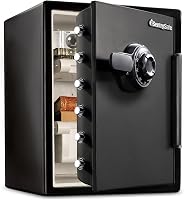
How to Choose a Safe for Cash Drawers
Choose a safe for cash drawers by measuring the drawer’s outside width, depth, and height, then checking those against the safe’s usable interior dimensions. Allow extra room to slide the drawer in and lift it out without catching on the walls or lid.
On this page (7 sections)
How to Choose a Safe for Cash Drawers
Choose a safe for cash drawers by measuring the drawer’s outside width, depth, and height, then checking those against the safe’s usable interior dimensions. Allow extra room to slide the drawer in and lift it out without catching on the walls or lid.
Measure the removable drawer with its tray, dividers, and handle in place. If it has a lid or moving parts, measure it in the position you plan to store it.
A cash box with a removable tray can organize bills and coins, but it may not fit inside a separate safe. Compare the box’s outside size with the safe’s interior, and consider whether you need access to the cash box while it is stored.
How do you measure a cash drawer for a safe?
Measure the widest, deepest, and tallest points of the complete drawer. Use the outside dimensions because those determine whether it can pass through the safe opening and fit inside.
- Remove the drawer from its counter or register.
- Measure its maximum width from side to side, including handles or lips.
- Measure its maximum depth from front to back.
- Measure its height with the tray and any attached parts in their storage position.
- Measure again with the tray removed if you may store the parts separately.
Write down each dimension in the same order, such as width by depth by height. Don’t assume the drawer is square or that the tray is the widest part.
If you have more than one drawer, measure each one. Different registers can use drawers with similar names but different shapes.
What size safe for cash drawers should you choose?
Choose a safe whose usable interior is larger than the drawer in every direction. A close fit can make it hard to place the drawer inside or retrieve it without tipping it.
There is no universal clearance that works for every drawer. Leave enough room for your fingers to grasp the drawer and for the safe door or lid to open fully.
If you stack drawers, add their combined height and account for any parts that protrude.
Compare interior width to drawer width, interior depth to drawer depth, and interior height to drawer height. A safe’s exterior dimensions describe the cabinet’s footprint, not its usable storage space.
Which safe dimensions matter most?
The opening and the usable interior both matter. A drawer can fit inside the cabinet but still be too wide or tall to pass through its door.
Check the interior measurements and the door opening measurements when they are available. Also check whether hinges, shelves, interior ledges, or a door organizer reduce the clear space where the drawer will sit.
Plan around how you will use the safe:
- One drawer, stored flat: compare its full outside dimensions with the safe’s clear interior.
- Several drawers: add their widths or depths if they will sit side by side, and their heights if they will stack.
- Drawer plus cash box: measure both items and sketch how they will fit together.
- Frequent access: leave space to grip and remove the drawer without moving other contents.
A door organizer can take up space near the front of the safe. If you’re considering one, see our guide to the best gun safe door organizer and account for its position when planning drawer storage.
Should the cash drawer stay inside a cash box?
A removable tray can keep bills, coins, and receipts sorted, while a separate safe provides a place to store the complete box. Choose the arrangement based on whether you need to lift out the tray, the full box, or the drawer itself.
Some cash boxes have a tray over a lower compartment. Measure the box with the tray in place, then check the height with it removed if you may store the tray separately.
For ideas on this format, compare cash boxes with removable trays.
A separate insert tray may help organize a drawer that has room for one. Check the insert’s outside dimensions against the drawer’s usable interior, including any handles, rails, or built-in dividers.
See our guide to the best cash box insert tray for tray options.
These are cash boxes, not substitutes for a separately sized safe. Compare each box’s outside dimensions with the safe’s clear opening and usable interior before choosing a storage arrangement.
How much extra room should you leave?
Leave enough space to handle the drawer and close the safe without pressure. A drawer that fits only when angled or forced can snag, spill its contents, or block access to other items.
Test the layout with a cardboard template cut to the drawer’s measured dimensions. Place it in the safe’s proposed position and check whether you can get your hand around it and remove it smoothly.
If you need to store multiple drawers, try the planned arrangement with templates for each one. Check whether stacking them would press on trays, clips, or other movable parts.
For a safe in a tight spot, consider its access route as well as its storage capacity. Our guides to a large under-bed safe and a fireproof safe on wheels cover placement considerations for those setups.
What should you check before choosing a safe?
Confirm the safe’s interior dimensions, opening size, and layout before relying on its advertised capacity. Capacity alone does not tell you whether a wide, shallow drawer will fit.
Use this checklist:
- Record each drawer’s outside width, depth, and height.
- Check the safe’s usable interior measurements, not just its exterior.
- Compare the drawer dimensions with the safe door opening.
- Account for handles, hinges, ledges, shelves, and door organizers.
- Leave room to lift out the drawer and open its tray.
- Check whether the drawer will sit flat or need to be turned.
- Recheck your measurements before buying.
If the safe’s interior shape or opening dimensions are unclear, ask the seller or manufacturer to confirm them. Don’t assume a stated volume guarantees a particular drawer will fit.
How do you choose a safe for cash drawers?
Choose the safe that fits your largest drawer through its opening, with enough interior room to place and remove it easily. Measure every drawer and any cash box or insert you plan to store alongside it.
For a small portable box with a removable tray, compare the SentrySafe’s interior dimensions with the space you have. For a box with a lift-up tray and lower compartment, compare the Jssmst’s outside size with the safe opening.
For a smaller two-layer box, check whether the KYODOLED’s outside dimensions leave room for your hand.
If you’re storing a cash box rather than a register drawer, start with our cash box with removable tray guide, then confirm the safe’s clear dimensions before you choose.