How to Choose a Book Safe for a Gun
A book safe is not a suitable primary safe for a gun. Most are small diversion lockboxes, and a key lock or hidden compartment does not provide the secure, controlled firearm storage that a handgun needs.
On this page (8 sections)
- Is a book safe for a gun a safe choice?
- What should you use instead?
- Why does handgun fit need more than a length check?
- Which lock and access controls matter?
- What other limits do book diversion safes have?
- Which products suit small valuables instead?
- How should you choose a diversion safe for non-firearm items?
- What is the right decision for a book safe for a gun?
A book safe for a gun is usually the wrong choice for firearm storage. A diversion book may conceal small valuables, but concealment and a small lockbox are not the same as controlled, secure storage for a handgun.
If you searched for a book safe because you want a firearm out of sight, start by choosing a purpose-built handgun safe. Consider a diversion safe only for small valuables that are not firearms, and keep all storage inaccessible to children and unauthorized people.
Is a book safe for a gun a safe choice?
No. A book safe should not serve as your primary gun safe.
Its book-like cover is meant to blend into a shelf, while its interior is designed for small items rather than dependable firearm storage.
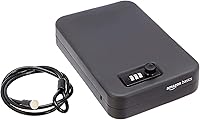
The Amazon Basics Portable Diversion Book Safe has a key lock and a 2-liter capacity, but its interior is only 2 in deep. It is described as a lockbox for cash, cards, documents and jewelry.
Those details do not mean it fits a handgun or offers the access control and protection a firearm requires.
A hidden container can be overlooked, but it can also be found, moved or opened by someone with access to the room. A key lock does not by itself show that a container is designed to resist forced entry or keep an unauthorized person from reaching a firearm.
Treat fit and security as separate questions. Even if an unloaded handgun fits inside a particular book box, that does not make the box a suitable firearm safe.
What should you use instead?
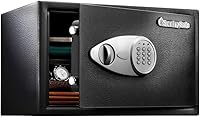
Choose a purpose-built handgun safe that matches the firearm, your access needs and the place where you will install it. Look for clear interior measurements, a lock method you can use reliably, and mounting or installation guidance from the manufacturer.
Before choosing, identify the specific firearm and what else needs to be stored with it. Check the safe's usable interior dimensions, including height and depth, rather than relying on its outside size or a broad capacity label.
Consider who should have access and how quickly you need to retrieve the firearm. Compare the safe's stated lock options and follow its instructions for setup and use.
If children or visitors may enter the room, plan storage and access around keeping the firearm out of their reach.
A purpose-built safe's name alone is not enough to judge it. Read its stated features and limitations, and check that the safe is intended for your firearm and your installation setting.
Why does handgun fit need more than a length check?
Measure the handgun and the space it needs inside the safe. A single length measurement can miss the height, width or clearance needed to place and retrieve it.
Measure the firearm according to its maker's instructions, and check the safe's interior dimensions in all directions. Account for any storage arrangement you plan to use, and confirm that the safe can close and lock as intended.
Do not assume that an exterior measurement is usable interior space. Walls, a door, a lock mechanism or internal fittings can reduce the opening.
If the safe maker does not give the interior dimensions you need, ask before buying.
For a book diversion safe, those checks may show whether a small object fits, but they cannot prove the container is suitable for a gun. A shallow compartment or snug fit is not a substitute for firearm-specific design.
Which lock and access controls matter?
Choose an access method that keeps the firearm controlled and works reliably for you. A hidden location does not control who can open a container.
Book safes often use simple locks intended to deter casual access to small valuables. The Amazon Basics book safe uses a key lock and includes 2 keys.
A key-based design also means you need a safe place for the keys where unauthorized people cannot reach them.
Explore the differences between book safes with key locks and book safes with combination locks for ordinary valuables. Those comparisons can help with choosing a diversion safe, but neither lock category makes a book safe a gun safe.
For a firearm, compare purpose-built safe options and follow the manufacturer's directions for access control. Keep keys, codes and other access methods restricted to responsible adults, and do not rely on hiding the container as the only safeguard.
What other limits do book diversion safes have?
A book safe is a compact stash container, not a protective cabinet. Its size, concealment design and simple closure limit what you should expect it to do.
The Amazon Basics book safe has a 2 in deep compartment and is designed to sit between other books. Its cover looks like a book, but it does not contain paper pages.
That makes it useful to consider for small valuables, while also showing why a firearm may be a poor fit.
The best book safe for kids guide can help you compare book-shaped containers for non-firearm items. A diversion safe should still be treated as a lockbox, not as a child-resistant firearm storage solution.
Other concealment products have different shapes, but the same distinction applies: an ordinary-object appearance does not provide firearm security. A hidden book safe may suit cash or jewelry, while a water bottle diversion safe is a small-item container designed to resemble a bottle.
Which products suit small valuables instead?
Use diversion containers for small valuables, not handguns. Their stated features can help you choose a place for keys, cash or jewelry when concealed storage is useful.
BigMouth Spam Diversion Can Safe
The BigMouth Spam Diversion Can Safe has a screw-off bottom compartment for small personal items. Its stated dimensions are 4.5 in deep by 3 in wide by 3 in high, so it is a compact container rather than a firearm safe.
It uses a key lock and has a metal body. Consider it for small valuables on a pantry or shelf, where a realistic can design fits the setting.
Do not use its concealed appearance or compact compartment as a reason to store a firearm inside.
Stash-it Diversion Water Bottle Safe
The Stash-it Diversion Water Bottle Safe has a hidden bottom compartment that unscrews. Its stated chamber depth is 6 cm and width is 2.5 in, making it intended for small items such as cash, jewelry or keys.
The bottle is designed to function as a water bottle as well as provide concealed storage. It has no lock, so it is especially important not to confuse concealment with access control.
It is not a gun safe.
A hanger diversion safe or large diversion safe may offer a different shape or storage use for small belongings. Compare each container's stated dimensions and access method, and reserve firearm storage for a purpose-built safe.
How should you choose a diversion safe for non-firearm items?
Match the container to the valuables and the place you plan to keep it. Check the usable compartment size, how it opens and whether its everyday appearance makes sense in that location.
For a book-shaped lockbox, check the interior depth and whether the cover and lock suit the shelf where it will sit. The Amazon Basics model is recommended to be placed between two books, and its front cover lifts to reveal a key-locked compartment.
For a can-shaped container, check whether its appearance fits among pantry or shelf items and whether the compartment is large enough for your valuables. The BigMouth model has a screw-off bottom and a small chamber.
For a bottle-shaped container, consider whether you need a working bottle and whether the small hidden compartment suits what you plan to carry. The Stash-it model has an unscrewing bottom compartment and no lock.
A diversion safe is not a good choice for every valuable. For items that need stronger protection or controlled access, compare a purpose-built safe.
For a fixed installation with a deposit opening, see how to choose a floor safe with a drop slot. For an in-wall option, compare wall safes with drop slots.
What is the right decision for a book safe for a gun?
Choose a purpose-built handgun safe for the firearm, and use book safes only for small non-firearm valuables. A handgun fitting inside a diversion box does not mean the box can provide suitable firearm storage.
Compare interior dimensions, lock access and installation guidance on a purpose-built safe. Follow the firearm and safe makers' instructions, and keep access restricted to responsible adults.
For cash, cards, keys or jewelry, a book safe can be a discreet storage option if its size and lock suit the task. For a gun, select a safe designed for firearm storage and keep concealment separate from security.
Frequently asked questions
Can a handgun fit in a book safe?
Some compact handguns may fit in a particular book safe, but fit alone does not make it appropriate firearm storage. Check the usable interior dimensions against the unloaded firearm and any required storage setup, then choose a purpose-built firearm safe with controlled access.
Are book safes secure enough for guns?
A book safe is a small diversion lockbox meant for items such as cash, cards, jewelry or keys. Its concealed appearance and key lock do not mean it can resist access or protect a firearm, so use a purpose-built gun safe instead.
Can I use a book safe to hide ammunition?
A book safe may physically hold small items, but it is not a substitute for secure ammunition storage. Keep ammunition controlled and stored according to the firearm maker's instructions and applicable local requirements, with access limited to responsible adults.
What should I use instead of a book safe for a handgun?
Choose a purpose-built handgun safe that fits the firearm and supports your access-control needs. Review its dimensions, lock method, mounting options and any stated security details, then install and use it according to the manufacturer's instructions and local requirements.