How to Buy a Home Safe
Buy a home safe by matching its capacity, lock type, protection rating and installation needs to what you store. Choose a larger electronic safe for everyday valuables, or a compact fire-resistant chest for documents and digital media.
On this page (7 sections)
- What size home safe should you buy?
- Which lock type is right for a home safe?
- What protection rating should a home safe have?
- Should you choose a document chest or an upright safe?
- Where should you install a home safe?
- How should you organize and maintain a home safe?
- How do you choose the best home safe for your needs?
Buy a home safe by matching storage capacity, lock type, protection rating and installation method to the items you need to protect. For brand-specific picks, compare Honeywell home safes.
A large electronic safe suits daily access to laptops, documents and valuables, while a compact fire-resistant chest suits passports, certificates, cash and digital media.
Start with the items you already own, not the outside shape of the cabinet. Measure your largest document folder, laptop or storage container, then add room for new records and valuables.
This approach helps you avoid a common mistake. A safe can look large from the outside yet hold less than you expect once the door, shelf and the shape of your items are taken into account.
Consider who will use the safe each day. A keypad works well when more than one person needs access, while a key lock works well when you prefer a simple routine with no code to remember.
Consider the main risk for your home as well. Some households need fire protection for records and media, while others mainly need a lockable cabinet that is harder to carry away.
For a wider starting list, compare the top 10 best home safes before narrowing your choice. The right safe is the one that fits your belongings, location and routine without creating a new access problem.
Measure the space where the safe will sit before you commit to a model. Check the width, depth, door swing and the route you will use to bring it inside.
Think about setup from the start. A model that can be bolted down may suit a fixed location, while a portable chest may suit travel or temporary storage in different rooms.
Think about care too. Keep the interior dry, store papers flat, and keep keys or codes separate from the safe so daily use stays simple and secure.
A careful match at this stage saves time later. You will spend less effort reorganizing, reaching for items, or wishing you had chosen a different lock or size.
What size home safe should you buy?
Choose a home safe that fits your largest planned item with room to organize smaller valuables around it. Capacity matters more than outside appearance, because thick walls, shelves and the door can reduce usable space.
A small chest can hold essential papers and small items, but it will not replace an upright safe for a laptop or larger folders. Measure both the inside and outside dimensions before choosing a location.
These 3 options show the main capacity split:
| Safe type | Capacity | Best match |
|---|---|---|
| Large electronic home safe | 1.18 cu ft | Laptop, documents, money and household valuables |
| Compact fire-resistant money safe | 0.18 cu ft | Passports, birth certificates, cash and digital media |
| Compact fire-resistant security chest | 0.18 cu ft | Documents, money and small valuables at home or during travel |
Think about access as well as volume. A deep safe can hold more, but poor organization may make important documents harder to find.
If you are deciding between a chest and an upright cabinet, read How Does a Document Chest Differ from an Upright Home Safe? for the practical trade-offs.
How much capacity do you need for documents and valuables?
You need enough capacity for the largest item plus clear space to remove it without unloading the safe. A 0.18 cu ft chest is for compact essentials, while a 1.18 cu ft cabinet gives you more room for mixed household storage.
Use a compact chest for passports, birth certificates, cash and small digital media. Choose the larger cabinet if you want to store a laptop, folders, jewelry and other valuables together.
Do not estimate capacity by the number of loose items alone. Envelopes, binders and electronics take different shapes, so measure them before ordering.
Which lock type is right for a home safe?
Choose an electronic keypad when you want quick routine access, or a key lock when you prefer a simple mechanical entry method. The best lock is the one you can operate consistently and protect from unauthorized access.
An electronic keypad can be useful when several authorized people need access without sharing a physical key. It also avoids searching for a key during a normal visit to the safe.
A key lock has a straightforward routine, but the keys become part of your security plan. Store spare keys somewhere separate from the safe and do not leave them in an obvious nearby drawer.
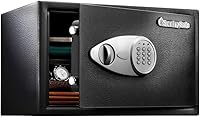
The SentrySafe Black Home Safe with Shelf uses a set-your-own combination electronic keypad and includes 2 override keys. Its removable, carpeted shelf helps separate items, while the interior light and charger cord access support everyday use.
This safe measures 16.9 in W x 14.6 in D x 10.6 in H outside and has a 27 lb weight. Its interior measures 16.8 in W x 11.6 in D x 10.5 in H, so check your laptop and folder dimensions before choosing it.
The pre-drilled design and included bolt down hardware support a more secure installation. It is freestanding or tabletop mounted, but the location still needs to support the cabinet and allow the door to open fully.
Choose this model when you want one cabinet for larger household items and regular access. Its electronic lock adds convenience, while the override keys provide another entry method if you forget the combination.
What protection rating should a home safe have?
Choose protection based on the main risk you are trying to reduce. A fire-resistant chest is designed for document and media protection, while a larger electronic cabinet here focuses on organized household storage and resistance to easy removal.
A fire rating is not the same as theft protection. Read the rating details carefully, then decide whether you need fire protection, a locking barrier, mounting support or a combination of these needs.
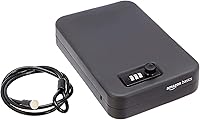
The SentrySafe Fireproof Money Safe with Key Lock is rated to protect important papers, digital media and valuables from fire for up to 1/2 hour at 1550°F. It has a 0.18 cu ft interior measuring 12 in W x 7.5 in D x 3.5 in H.
Its exterior measures 14.3 in W x 11.2 in D x 6.1 in H. The flat key lock is designed to keep the lid closed during a fire, and the hidden carrying grips make the 6 kg chest easier to move.
Choose it when the priority is a compact document box that can be carried between locations. Its small capacity makes it less suitable for laptops, binders or a large household collection.
The SentrySafe Fireproof Safe with Key Lock also has a 0.18 cu ft capacity and a 1/2-hour, 1550°F fire rating. It is UL Classified for that fire protection and ETL Verified to protect CDs, DVDs and USB drives from fire damage.
Its interior measures 12 in W x 7.5 in D x 3.5 in H, and its exterior measures 14.3 in W x 11.2 in D x 6.1 in H. The chest weighs 13 lb and includes a bolt down hardware kit.
For the fire protection to work as intended, keep it closed and locked with the feet down. The front key plate should face out, not up.
Choose this model when you want fire protection with both portability and mounting support. Compared with the other compact chest, it adds stated protection for CDs, DVDs and USB drives, plus included bolt down hardware.
Should you choose a document chest or an upright safe?
Choose a document chest when your main items are flat papers, cash and digital media. Choose an upright safe when you need room for a laptop, larger folders or several types of household valuables.
A chest generally uses horizontal storage, which can suit documents but may require stacking. An upright cabinet can make mixed storage easier, especially when it includes a shelf.
Placement also changes the decision. A small chest may fit on a floor or travel with you, while a larger safe needs a stable location and enough room for its door.
A document chest suits people who mainly protect passports, certificates, cash and small media. It keeps those items in one compact place and is easier to move between rooms or carry during travel.
An upright safe suits households with mixed items that do not stack neatly. A shelf can separate a laptop from folders, jewelry or money so the contents stay organized and easier to reach.
Daily access matters in this choice. If you open the safe often, reach and visibility may matter more than a low profile.
If you open it rarely, a chest placed out of sight may work better.
Setup also differs between the two styles. A chest can often sit on a floor or shelf with little work, while an upright safe may need a stronger surface and, where supported, bolt down hardware.
Care is simpler when the shape fits the contents. Flat documents stored in a chest should stay flat, while upright storage should not force binders, laptops or boxes into tight angles.
If fire protection is your main concern, compare the types of home safes before choosing based only on lock style. Different safe designs solve different storage and protection problems.
The honest trade-off is space against convenience. A chest saves room and travels well, while an upright safe gives more flexible storage for larger and more varied items.
Choose based on the items you will store most often. That keeps the decision practical and avoids buying capacity you will not use.
Where should you install a home safe?
Install a home safe in a discreet location that can support its weight and still allow normal access. The safest location is one that balances concealment, mounting, dry conditions and daily convenience.
Measure the route to the location first. Check doorways, stairs, turns and shelf openings before moving a heavy cabinet into place.
For a larger safe, inspect the shelf, floor or tabletop support. The SentrySafe Black Home Safe weighs 27 lb before you add its contents, so the surface must handle the combined load.
Use bolt down hardware when the safe and location support it. The large electronic safe is pre-drilled for installation, and the 1210 fireproof chest includes a bolt down hardware kit.
Do not hide the safe where moisture, heat or flooding can damage its contents. Keep keys, override keys and access information separate from the safe, but make sure authorized users can retrieve them during an emergency.
A freeze alarm can add another layer of protection in vulnerable areas. See our guide to the best freeze alarms for homes if the safe will be stored near an unheated room, basement or exterior wall.
How should you organize and maintain a home safe?
Organize the safe by how often you need each item. Keep frequently used records near the front, group related documents in flat folders, and leave enough space to remove papers without bending them.
For a keypad safe, record the combination in a secure place that is separate from the safe. Test your access routine after setup, then check that the door, shelf and light work as expected without forcing any part.
For a key-lock chest, protect both keys from loss and do not store them beside the safe. Keep digital media in the section that best fits the chest's stated protection purpose.
Good organization starts with a short inventory. List what goes in the safe, then place the items you reach for most where you can see and remove them without moving everything else.
Use flat folders for papers and certificates. This keeps edges from curling and makes it easier to add new records without unpacking the whole safe.
Keep cash, keys and small valuables in a separate group. A small pouch or envelope can keep them from shifting among larger folders during daily use.
For digital media, keep cases closed and labels facing out. This protects the items from dust and makes it easier to find the right disc or drive when you need it.
After setup, practice opening and closing the safe a few times. Confirm that the lock, hinge, shelf and light all work smoothly and that the door clears nearby furniture.
Clean the interior with a dry cloth and check for moisture. Wipe away dust around the keypad or key slot, and avoid forcing the door if anything feels stuck.
Replace batteries or access parts only as directed for your model. Keep spare keys and any recorded code in a secure place away from the safe itself.
Review the contents once or twice a year. Remove expired records, replace damaged folders and confirm that the safe still fits the items you need to protect.
This routine keeps the safe useful rather than forgotten. A little regular care protects both the contents and your ability to reach them quickly.
How do you choose the best home safe for your needs?
Choose the SentrySafe Black Home Safe with Shelf if you need 1.18 cu ft of organized space, electronic keypad access, a removable shelf and room for a laptop or larger household items.
Choose the SentrySafe Fireproof Money Safe with Key Lock if you want a compact 0.18 cu ft chest for documents, cash and digital media with carrying grips and 2 keys.
Choose the SentrySafe Fireproof Safe with Key Lock if you want the same compact capacity with stated protection for CDs, DVDs and USB drives, plus bolt down hardware and a carrying handle.
The larger electronic safe suits daily household storage. Its shelf helps separate items, its light makes the interior easier to use, and its keypad avoids the need to carry a key for routine access.
The compact money safe suits a narrower set of contents. It is a better fit for passports, birth certificates, cash and digital media than for a laptop or large binders.
The other compact chest suits similar contents with a stronger focus on media. Its stated protection for CDs, DVDs and USB drives makes it a clear choice when those items matter.
Before you buy, measure the items and installation route, decide whether fire protection is essential, and choose the lock you can manage without creating access problems. If you are watching for a specific deal, compare options in our guide to the best home safe on sale.
Check weight and placement before ordering. A larger safe needs a stable surface, while a portable chest still needs a dry, secure spot at home or on the road.
Keep keys, override keys or codes separate from the safe. This small habit supports both security and daily access for everyone who is allowed to use it.
Make the final choice by fit, not by features alone. The best option is the one that holds your items, matches your main risk, and fits the routine you will actually follow.
Frequently asked questions
What size home safe should I buy?
Choose a safe by the largest item you plan to store, then leave room for future documents and valuables. A 1.18 cu ft safe suits laptops, documents, money and other household items, while a 0.18 cu ft chest is better for passports, certificates, cash and small digital media.
Is an electronic or key lock better for a home safe?
An electronic lock gives quick access without carrying a key, while a key lock keeps the design simple and does not depend on keypad entry. Choose the lock you can manage reliably, then keep override keys or spare keys in a secure place away from the safe.
Should a home safe be bolted down?
Bolt down a home safe when the model supports mounting and the location allows it. Securing the cabinet makes removal harder.
Check the floor or shelf structure first, use the included hardware when applicable, and avoid blocking vents, doors or access points.
Where should I put a home safe?
Place a home safe where you can reach it during normal use but where it is not obvious to visitors. Confirm the floor, shelf or cabinet can support its weight, check the door swing, and keep keys, power access and mounting points manageable.