How to Choose a Gun Safe
Buy the gun safe that matches your firearm capacity, access needs, construction, and protection priorities. Choose a compact key-lock chest for documents and small valuables, a steel electronic safe for mounted access, or a larger fireproof document safe when paperwork matters too.
On this page (10 sections)
- How to Choose a Gun Safe
- What gun safe should I buy first?
- How much capacity do you need?
- Which lock type should you choose?
- Do you need fireproof and waterproof protection?
- How should construction affect your choice?
- Where should you place a gun safe?
- Can one safe hold guns, jewelry, and documents?
- What should you check before buying?
- So, what gun safe should I buy?
How to Choose a Gun Safe
The right gun safe depends on what you need to store, how quickly you need access, and which risks matter most in your home. Compare firearm capacity, lock type, construction, mounting, fire protection, water protection, and document storage before you choose.
A safe for one small firearm has different needs from a safe that also holds passports, legal papers, money, jewelry, or family records. The best choice is the one that fits your actual storage list without making access, placement, or emergency planning difficult.
We compared the stated dimensions, materials, lock types, protection features, and storage layouts of 3 options. The products below cover a portable fireproof chest, a steel electronic safe, and a larger fireproof document box.
What gun safe should I buy first?
Start with the largest item you plan to store and the way you want to open the safe. Then check whether the safe's construction, protection features, and mounting options fit the room where it will stay.
Use this order:
- List the firearm or firearms, documents, valuables, and accessories that need protection.
- Measure the largest item, including any case or container you plan to keep with it.
- Choose key access or electronic button control.
- Decide whether fire and water protection are essential.
- Check the safe's outside dimensions, weight, and mounting style.
- Plan where emergency keys, batteries, and access instructions will be secured.
- Confirm that the safe will stay closed, stable, and out of reach of unauthorized users.
A safe that is too small can become difficult to organize. A safe that is too large for its location may be left unsecured, blocked by furniture, or hard to reach when you need it.
For a broader starting point, compare our guide to the best gun safes for home. It helps you think about the safe as part of the room, not as an isolated box.
How much capacity do you need?
Choose capacity by the contents you will store together, not by the outside size alone. Interior width, depth, and height determine whether a firearm, folder, passport, or valuables pouch can sit in the space without awkward stacking.
The 3 options here have different storage layouts:
| Safe | Capacity | Interior measurements | Best fit |
|---|---|---|---|
| SentrySafe CHW20221 | 0.28 cu ft | 12.8 W x 8.5 D x 4.4 H in | Small documents, money, passports, and small valuables |
| Amazon Basics 25EI | 14 liters | 13.6 W x 7.2 D x 9.7 H in | Compact valuables and documents with a removable shelf |
| SentrySafe HD4100 | 0.65 cu ft | 12 W x 8.1 D x 11.5 H in | Hanging file folders and important paperwork |
Interior dimensions matter more than capacity labels when you need to fit a specific object. Measure your largest item and leave room to remove it without emptying the safe.
If firearms and documents will share one safe, keep the contents organized so the firearm does not become buried under folders or loose valuables. The best safe for guns and documents guide can help you compare that combined use.
Which lock type should you choose?
Choose a key lock for simple, battery-free access or an electronic lock for button control and passcode entry. The better choice depends on who needs access, how often you open the safe, and how securely you can store backup access items.
A key lock has a straightforward routine. You need to control the keys and keep a backup key in a secure place.
A key can also be easier to understand for a household that does not want batteries or a code.
An electronic lock can make regular access more convenient. It also creates extra care tasks because batteries can run down, and emergency override keys need a secure storage plan.
Do not leave a backup key beside the safe. Do not write an access code where an unauthorized person could find it.
Your access plan should protect the safe without making lawful access impossible during a stressful event.
Is a key-lock safe right for your storage?
A key-lock safe suits buyers who want simple control and no battery routine. Both SentrySafe options here use key locks, but they serve different storage needs.
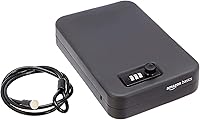
The SentrySafe Charcoal Gray Fireproof and Waterproof Safe has 0.28 cubic feet of capacity. Its exterior measures 15.4 W x 14.3 D x 6.6 H inches, while the interior measures 12.8 W x 8.5 D x 4.4 H inches.
SentrySafe says the box is UL Classified to endure 1/2 hour at 1550°F. It is also ETL Verified for 72 hours of water submersion.
Those features make it more relevant to documents and small valuables than to buyers who need a tall cabinet.
The tubular key lock includes 2 keys. Carrying grips support moving the 20 lb chest between locations, although a portable safe still needs a secure storage plan when it is not in use.
Choose this model when your storage list is compact and fire and water protection are priorities. Its shallow 4.4 in interior height limits what you can store upright.
Is an electronic safe right for your storage?
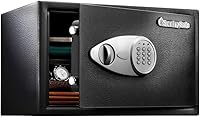
An electronic safe suits buyers who want button control, steel construction, and flexible mounting. The Amazon Basics Steel Security Safe has a 0.5 cu ft capacity, a removable shelf, and an electronic keypad.
The safe measures 13.8 W x 9.8 D x 9.8 H inches outside. Its interior measures 13.6 W x 7.2 D x 9.7 H inches, and the door is about 2 inches thick.
The electronic lock uses 4 AA batteries, which are not included. It has 3 operation indicator lights and includes 2 emergency override keys.
Keep those keys in a secure location that is separate from the safe.
Alloy steel construction, concealed pry-resistant hinges, and a carpeted floor address everyday security and item protection. The removable shelf lets you separate shorter items from taller contents.
Pre-drilled mounting holes and 4 expansion bolts support mounting to a wall, floor, or shelf. Measure the surface and confirm that the chosen mounting location can accept the hardware before installation.
Choose this model when access speed and mounting flexibility matter more than fire or water protection. The features do not make it a fireproof or waterproof safe, so do not treat it as a replacement for one when those risks are central.
Do you need fireproof and waterproof protection?
Choose fire and water protection when the safe will hold documents or valuables that cannot be replaced easily. A lock can limit access, but it does not protect paper from heat or water exposure by itself.
Fire protection levels are not identical across safe types. Compare the stated fire endurance details, the contents the safe is designed to hold, and the amount of interior space available for your documents.
Water protection also needs careful interpretation. A waterproof rating can help during a water event, but it does not remove the need to keep the safe stable, closed, and correctly placed.
The SentrySafe HD4100 is the largest option here by listed capacity. It has a 0.65 cu ft interior and is designed around document storage.
The SentrySafe Black Fireproof and Waterproof Safe measures 15.5 W x 13.5 D x 14.3 H inches outside. Its interior measures 12 W x 8.1 D x 11.5 H inches, giving it more vertical space than the compact CHW20221.
SentrySafe says the HD4100 is UL Classified to withstand high temperatures for up to 30 minutes and ETL Verified to protect contents during water exposure. The steel and fire-resistant composite construction is aimed at important papers and household records.
The key lock includes 2 keys. The interior accommodates hanging file folders, which can make passports, birth certificates, insurance records, and legal paperwork easier to sort.
At 38.8 lb, this safe is heavier than the other 2 options here. Its 14.3 in exterior height also needs more vertical clearance than a shallow chest.
Choose the HD4100 when documents are the main reason you need the safe and you want more vertical organization. Choose the CHW20221 when portability and a lower profile matter more.
For related household fire planning, read what is an ABC fire extinguisher. A fire extinguisher and a fire-resistant safe serve different purposes, so one should not be treated as a substitute for the other.
How should construction affect your choice?
Construction matters because the safe must stay stable and resist the type of access you are trying to control. Compare steel or composite construction, hinge design, weight, and mounting options with the room and the threat you are planning for.
The Amazon Basics safe uses alloy steel, concealed pry-resistant hinges, and mounting hardware. Those details fit a buyer who wants a mounted security box for documents and valuables.
The SentrySafe CHW20221 uses a polyethylene material type and is designed as a portable fire chest. Its carrying grips support movement, which is useful when you need a portable document box but also means placement and access control deserve attention.
The SentrySafe HD4100 uses steel and fire-resistant composites. It is heavier and taller, with a floor-mount style and a document-focused interior.
Construction does not tell you everything about security. A safe's location, mounting, access control, and the habits of everyone in the household affect how well it works in daily use.
Where should you place a gun safe?
Place the safe on a stable surface where you can control access and still reach it when needed. Check the floor, shelf, wall, doorway, opening space, and the route used to move the safe into position.
Before installation:
- Measure the narrowest doorway, hallway, and turn.
- Compare the route with the safe's outside dimensions.
- Check whether the door or lid can open fully.
- Keep the lock and controls reachable.
- Avoid blocking vents, exits, or other safety equipment.
- Use the mounting method that matches the safe and surface.
- Keep keys, batteries, and access information secured separately.
- Review the safe's contents and access plan as household needs change.
A compact safe can fit inside more locations, but it may not hold larger firearms or folders. A taller safe can organize documents better, but it needs more vertical clearance and may be harder to move.
If a wall location is your main goal, compare the best wall gun safe options before choosing a floor or shelf model. Wall installation changes the measurement and mounting questions, so plan the structure first.
Can one safe hold guns, jewelry, and documents?
One safe can hold different categories when the interior shape, access plan, and protection features match the full contents. Check whether the space fits the firearm and documents without crowding jewelry or making everyday access awkward.
A safe that holds papers well may not offer the height or layout you want for a firearm. A safe that opens quickly may not offer the fire and water protection you want for records.
Keep small valuables in a separate container inside the safe if that helps prevent movement and makes inventory easier. Do not overload the safe until the door or lid closes securely.
The best safe for guns and jewelry guide is useful when those 2 storage needs matter more than document filing. For gun and document storage, compare interior measurements rather than relying only on the cubic-foot number.
What should you check before buying?
Check fit, access, protection, placement, and care requirements before you order. A short checklist can prevent the most common mismatch between a safe and the room where it will live.
Fit
Measure the firearm, folders, passports, valuables, and any case you plan to store. Compare those measurements with the interior width, depth, and height.
Access
Choose a key lock if you want simple battery-free control. Choose an electronic keypad if button access and a passcode suit your household, then plan for batteries and override keys.
Protection
Decide whether fire protection, water protection, or both are required. Read the stated protection details carefully and match them to the contents you cannot replace.
Construction
Look for the material, hinge design, weight, and mounting style that suit your location. A portable safe needs a careful storage plan, while a mounting-ready safe needs a suitable surface.
Placement
Measure the full delivery route and the space around the safe. Confirm that the door or lid can open, the controls stay reachable, and the safe does not interfere with other household safety equipment.
Care
Keep the lock area clear, monitor battery needs on electronic models, and keep backup keys secure. Review the contents from time to time so the safe does not become a disorganized container that hides what matters.
So, what gun safe should I buy?
Buy the SentrySafe CHW20221 if you need a compact key-lock chest with stated fire and water protection for documents and small valuables. Choose the Amazon Basics 25EI if electronic access, alloy steel construction, a removable shelf, and flexible mounting matter more.
Choose the SentrySafe HD4100 if you need a larger document-focused interior with room for hanging file folders and stated fire and water protection. The final choice should follow your largest item, preferred lock, protection needs, and available placement.
For a mixed storage plan, start with the safe whose interior layout fits your documents and firearm together. If the contents do not fit comfortably, a higher capacity label will not solve the problem.
Match the answer to what gun safe should I buy by checking measurements and access before features that do not serve your daily use.
Frequently asked questions
What gun safe should I buy for a small firearm and documents?
Choose a safe that fits the firearm without forcing papers or other items into the lock area. A compact fireproof and waterproof chest can suit documents, passports, money, and small valuables, while a steel security safe gives you electronic access, a shelf, and mounting hardware.
Is a key or electronic lock better for a gun safe?
A key lock suits buyers who want simple access without batteries or passcodes. An electronic lock suits buyers who prefer button control and faster code-based entry, but it needs batteries and a secure place for the emergency override keys.
Should I buy a fireproof gun safe?
Buy fire protection when the safe will hold documents or valuables that fire could destroy. Fire resistance does not replace secure placement, correct locking, or safe firearm handling, so compare fire protection with construction, access, capacity, and the location where the safe will stay.
Where should I put a gun safe?
Put the safe where you can control access, reach it when needed, and keep it on a stable surface. Measure the route, the opening space, and the room around it before choosing a floor, shelf, closet, or wall location.