Which Type of Home Safe Should You Choose?
The best type of home safe depends on what you store, the protection you need and where the safe will go. Choose an upright safe for organized valuables, or a document chest for compact fire protection.
On this page (10 sections)
- Which type of home safe fits your storage needs?
- Is an upright home safe right for you?
- When is a document chest a better choice?
- Does a fire-resistant safe protect the same things as a security safe?
- Should you choose a keypad or key lock?
- How does safe size change the buying decision?
- Does brand or lock style decide the best safe?
- What should you check before installing a home safe?
- Is a home safe better than a safe deposit box?
- How should you choose among these types of home safes?
The best type of home safe depends on what you want to protect, how quickly you need access and how much space you have. Choose an upright safe for organized storage of laptops, documents, money and jewelry, or choose a document chest for compact fire protection.
A safe also needs a sensible location. Measure the available space, compare the interior with your largest item and decide whether you need a keypad, a key lock, a shelf, carrying handles or bolt-down hardware.
The main types of home safes fall into a few useful groups:
- Upright security safes for larger valuables and organized storage
- Document chests for papers, passports and small digital media
- Fire-resistant safes for protection from heat
- Portable lock boxes for short-term or mobile storage
- Keypad safes for quick access without a daily key
- Key-lock safes for simple operation
Which type of home safe fits your storage needs?
Match the safe type to the item that would cause the greatest problem if lost or damaged. A laptop needs more interior width than a passport, while paper records need a different form of protection from jewelry or cash.
| Safe type | Best fit | Main strength | Main trade-off |
|---|---|---|---|
| Upright home safe | Laptops, documents, money and jewelry | More usable organization and capacity | Needs a stable, planned location |
| Document chest | Passports, certificates and paper records | Compact fire-resistant storage | Limited height and capacity |
| Portable fire safe | Small records and valuables | Easy to carry or move | Less room for bulky items |
| Keypad safe | Frequent home access | Set-your-own combination access | Requires keypad management |
| Key-lock safe | Simple, infrequent access | No combination to remember | You must protect the keys |
| Bolt-down safe | Valuables that should stay in place | Hardware can make removal harder | Installation needs planning |
This table is a starting point, not a substitute for measuring. Two safes with similar outside dimensions can have different usable interiors because shelves, insulation and locking parts take up space.
If you need a broader comparison, start with our guide to the top 10 best home safes. It can help you compare general safe designs before narrowing the choice to one type.
Is an upright home safe right for you?
An upright home safe is the better choice when you need organized storage for several categories of valuables. It can suit a laptop, folders, cash, jewelry and other items that would be awkward in a shallow chest.
An upright design often gives you more height and a more useful layout. A removable shelf can separate smaller items from larger ones, so you do not have to empty the whole safe to reach the bottom.
Placement matters more with this type. Measure the shelf, cabinet or floor area, then check the safe's door swing and the route used to bring it into the room.
SentrySafe Black Home Safe with Shelf
The SentrySafe Black Home Safe with Shelf suits someone who wants large home storage with a removable shelf and keypad access. Its exterior measures 16.9 in W x 14.6 in D x 10.6 in H, and its capacity is 1.18 cubic feet.
The shelf helps separate documents and smaller valuables from larger items. The interior light can make it easier to identify contents when the safe is placed in a dim cabinet or room.
Its interior measures 16.8 in W x 11.6 in D x 10.5 in H. That gives you a useful check before storing a laptop, binder or box.
Measure the item itself because interior width and depth are not the same as the exterior measurements.
The keypad suits regular access when you do not want to use a key every time. The 2 override keys provide another way to open it if you forget the combination, so they should be stored somewhere secure but reachable.
This safe is also pre-drilled, and bolt-down hardware is included. That makes it a better match for a planned installation than for someone who wants to move a safe from room to room.
Choose it for organized, everyday home storage. Skip it if your main goal is a small fire-resistant chest for a few papers.
When is a document chest a better choice?
A document chest is a better fit when you need compact storage for papers, passports, certificates, cash or small digital media. Its low shape can fit under a desk, on a shelf or in another small location.
The trade-off is capacity. A chest can protect a small group of important items, but it will not organize tall folders or replace a larger upright safe.
A chest also works well for people who want simple key access. You do not need to manage a keypad combination, but you do need a safe plan for the keys.
For a closer comparison of these shapes, read How Does a Document Chest Differ from an Upright Home Safe?. The key question is whether your priority is compact document protection or flexible storage for larger belongings.
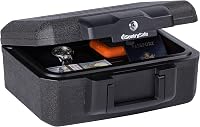
SentrySafe Fireproof Money Safe with Key Lock
The SentrySafe Fireproof Money Safe with Key Lock suits someone who wants a portable document box with a key lock and carrying grips. Its exterior measures 14.3 in W x 11.2 in D x 6.1 in H, while its interior measures 12 in W x 7.5 in D x 3.5 in H.
The interior height of 3.5 in makes this a shallow storage option. It can suit flat papers and small valuables, but you should measure anything bulky before choosing it.
The chest is designed to protect contents from fire for up to 1/2 hour at 1550°F. That protection is tied to the specific conditions and time stated for the safe, so it should not be treated as unlimited fire protection.
The flat key lock helps keep the lid closed during a fire. Store the 2 keys away from the chest but somewhere you can reach them when needed.
The carrying grips make it easier to transport than a larger upright safe. That can help if you need to move the chest between rooms or take it with you, but portability also means placement alone does not secure it in one spot.
Choose it for compact paper and small-item storage. Skip it if you need a shelf, room for a laptop or space for tall folders.
Does a fire-resistant safe protect the same things as a security safe?
A fire-resistant safe is designed around limiting heat damage, while a security safe is designed around controlling access and making removal harder. Some safes combine both goals, but you should check the stated features instead of assuming one type provides every kind of protection.
Paper documents, passports and digital media can need different protection from cash or jewelry. A fire-resistant chest may be a strong match for irreplaceable records, while a larger keypad safe may be more practical for everyday valuables.
Fire protection also has a time and temperature limit. If the safe states protection for 1/2 hour at 1550°F, use that statement as the boundary rather than calling the safe permanently fireproof.
SentrySafe Fireproof Safe with Key Lock
The SentrySafe Fireproof Safe with Key Lock suits someone who wants a compact, mountable chest for documents and digital media. It has a 0.18 cu ft capacity, a 12 in W x 7.5 in D x 3.5 in interior and a 14.3 in W x 11.2 in D x 6.1 in exterior.
This model is UL Classified to endure 1/2 hour at 1550°F. It is also ETL Verified to protect CDs, DVDs and USB drives from fire damage.
Those statements describe specific protection claims, not a promise that every item survives every fire.
The built-in carrying handle makes the chest easier to move. The bolt-down hardware kit gives you another installation option when you want the chest secured to a floor or other suitable surface.
Its low interior is better for flat records than for tall items. Measure passports, envelopes, drives and document folders before choosing it, and leave room to close the lid without forcing the contents.
For fire protection around the rest of your home, see our guide to smoke detectors. A safe protects selected belongings, while smoke detection helps alert people to danger.
Choose it when fire protection and compact mounting matter. Skip it if you want keypad access or an upright layout.
Should you choose a keypad or key lock?
Choose a keypad safe for repeated access and a key-lock safe for simple, occasional access. The right lock depends on who needs access, how often you open the safe and how you will manage the backup method.
A keypad reduces the need to carry a key during normal use. You still need to remember the combination and keep any override keys secure.
A key lock has fewer controls to manage, but the key becomes the important access item. Do not leave it next to the safe, and avoid hiding it in an obvious nearby location.
The lock type does not determine the safe's capacity or fire protection. A keypad safe can still need careful placement, and a key-lock chest can still have a strict size limit.
How does safe size change the buying decision?
Buy for the largest item you will store, not the average item. A small chest may hold passports well but fail when you add a folder, tablet or multiple envelopes.
Use interior dimensions for the actual fit and exterior dimensions for the room. Check width, depth and height separately because a safe can fit one direction but block a door or shelf in another.
Capacity also affects organization. A shelf divides space in an upright safe, while a shallow chest keeps items in one layer but may make sorting simpler.
For a compact home, measure the proposed location with tape. Check the door swing, the floor or shelf strength and the space needed to remove the contents.
If you live in an apartment, installation can be a bigger concern than capacity. Our guide to the best safe for apartment covers placement concerns for smaller homes and shared buildings.
Does brand or lock style decide the best safe?
Brand and lock style matter, but the best safe is the one that matches your storage task and installation limits. A familiar brand does not make an undersized chest suitable for a laptop, and a keypad does not replace a secure location.
Compare the exact model, dimensions, capacity, lock type and included hardware. The products here show why two compact black safes can still suit different buyers.
If you are comparing a particular brand, see our guide to the best Honeywell safes for home. If biometric access is your priority, our best Barska biometric safes guide focuses on that access style.
What should you check before installing a home safe?
Check fit, access and stability before you place the safe. Installation problems usually come from a blocked door, an unreachable key, a weak shelf or a location that makes the safe hard to use.
Use this checklist:
- Measure the safe's exterior dimensions and the route to its final location.
- Compare the interior dimensions with your largest document, device or box.
- Confirm that the door can open fully without hitting a wall or nearby item.
- Check whether the safe needs floor, shelf or bolt-down installation.
- Keep keypad controls, keys and handles accessible to the authorized user.
- Store override keys away from the safe.
- For a fire-resistant chest, follow the stated closed and locked storage position.
- Keep the safe dry and free from clutter that could block the lid or door.
For a bolt-down model, use the included hardware as directed and confirm that the surface is suitable before drilling. If you rent, check your lease before making permanent changes.
A hidden location is not automatically a good location. You still need to reach the safe quickly, read the keypad or lock and remove documents without moving heavy objects first.
Is a home safe better than a safe deposit box?
A home safe gives you immediate access at home, while a safe deposit box keeps selected items outside the home and may limit access to bank hours and account rules. Neither option is best for every document or valuable.
Keep items at home when you need them often or need access during an emergency. Consider an external storage option for items you rarely use and do not want stored in the house.
Our home safe vs safe deposit box comparison can help you sort items by access needs, risk and storage location. You can also compare current options in our guide to the best home safe on sale.
How should you choose among these types of home safes?
Choose the SentrySafe Black Home Safe with Shelf if you need the most room here, a removable shelf, keypad access and bolt-down hardware. Its 1.18 cu ft capacity makes it the clearest fit for laptops, documents, money and several categories of valuables.
Choose the SentrySafe Fireproof Money Safe with Key Lock if you need a portable, shallow chest for papers and small items. Its carrying grips and key lock suit simple storage, but its 0.18 cu ft interior limits what it can hold.
Choose the SentrySafe Fireproof Safe with Key Lock if you want a compact fire-resistant chest with a carrying handle and bolt-down hardware kit. Its fire and digital-media protection claims make it a focused document-storage choice.
The right type of home safe is the one whose interior fits your largest item, whose lock matches your access habits and whose installation works in your space.
Frequently asked questions
What type of home safe is best for documents?
A fire-resistant document chest is usually the best fit for passports, certificates, paper records and small digital media because it keeps those items together in a compact compartment. Choose an upright safe instead when you need more room, a shelf or faster access to several kinds of valuables.
Should I choose a digital or key lock home safe?
Choose a digital lock if you want to set a combination and open the safe without carrying a key. Choose a key lock if simple access matters more, or if you prefer a lock that does not depend on keypad controls.
Keep any override or spare keys secure.
Are home safes fireproof or theft resistant?
A safe can focus on fire resistance, theft deterrence or both, depending on its design and stated features. Fire-resistant chests protect contents from heat for a stated period, while an upright safe with bolt-down hardware can make removal more difficult.
No home safe makes valuables impossible to steal.
What size home safe should I buy?
Choose a size based on the largest item you need to store and the space available at home. Measure laptops, folders and boxes before buying, then check the safe's interior dimensions.
A shelf improves organization, while a small chest is easier to carry and place.
Where should a home safe be placed?
Place a home safe where you can access it without making it obvious, and secure it according to its design. Check floor or shelf strength, door clearance, keypad access and bolt-down requirements.
Keep a fire-resistant chest closed and locked, with its key plate facing out when the maker specifies that position.